


Plan Your Michigan Roof Replacement Before Leaks Get Worse
For roof replacement MI homeowners, the smart first move is to schedule an inspection when you see recurring leaks, missing or curling shingles, heavy granule loss, sagging, or ice-dam damage. Then compare a written scope, material options, permit needs, warranty terms, and insurance coverage before signing a contract.
Michigan roofs face snow loads, ice, wind, hail, and repeated freeze-thaw cycles. Those conditions can turn a small flashing failure or worn shingle field into wet insulation, rotten decking, and interior damage. A timely replacement can protect the home, improve attic efficiency, and avoid the higher cost of emergency work.
Costs vary widely based on roof size, pitch, tear-off layers, decking repairs, chosen materials, access, and local labor rates. Architectural asphalt shingles are a common choice, while metal and impact-resistant options may make sense for homeowners prioritizing long-term durability. The key is getting an itemized estimate, not relying on a single price per square foot.
I am Darren, co-owner of The Roof Company, and I have more than 30 years of experience helping Southeast Michigan homeowners make clear, informed roof replacement MI decisions. In the sections ahead, I will walk through the warning signs, costs, materials, contractor checks, permits, insurance, and installation process.
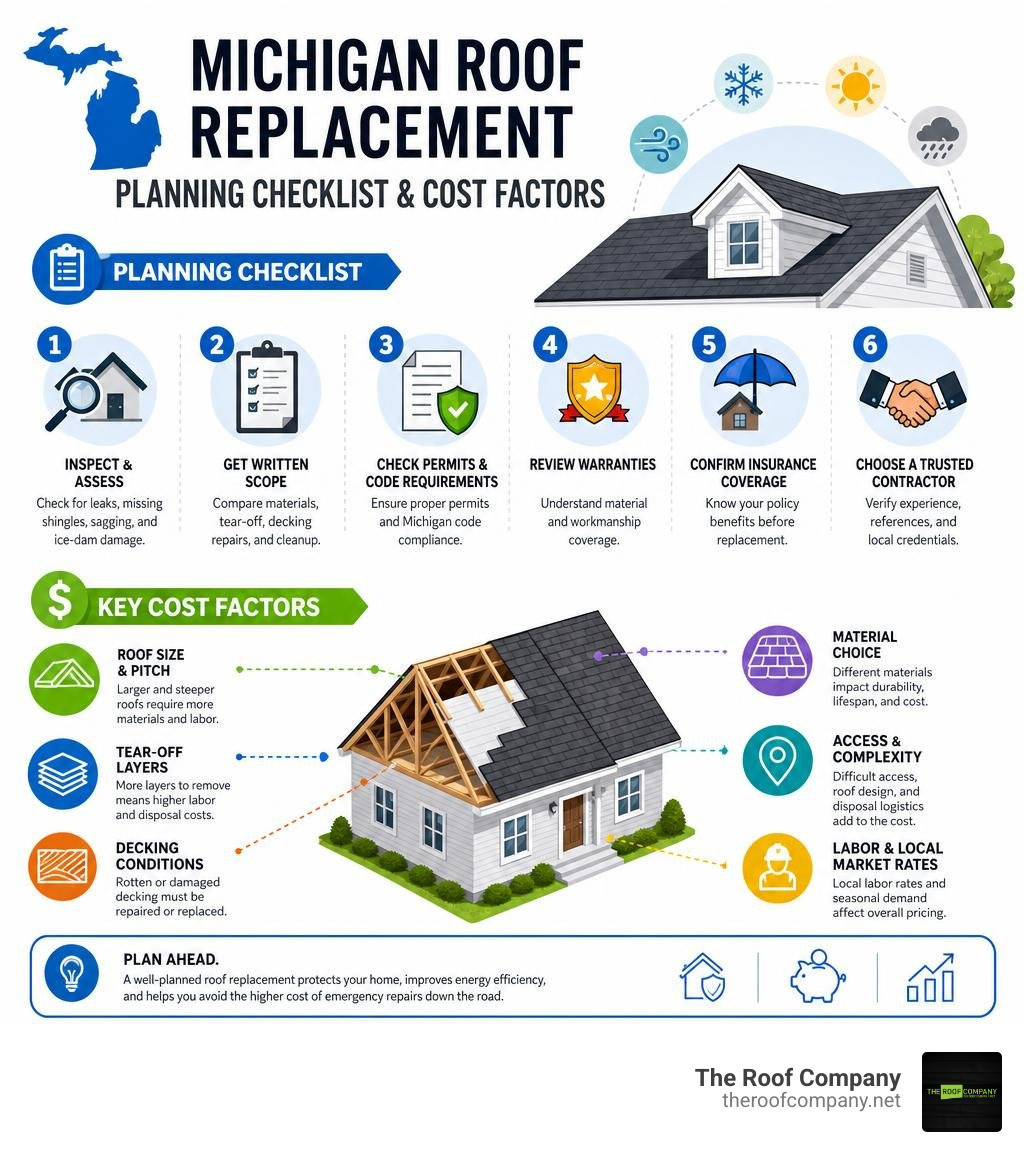
Step-by-Step Planning for Roof Replacement MI
Planning a complete reroofing project in Michigan requires more than just picking a color and writing a check. Our Great Lakes climate presents unique engineering challenges, from heavy lake-effect snow loads to sudden summer windstorms. Navigating these factors requires a structured approach that balances damage assessment, building codes, and budget planning.
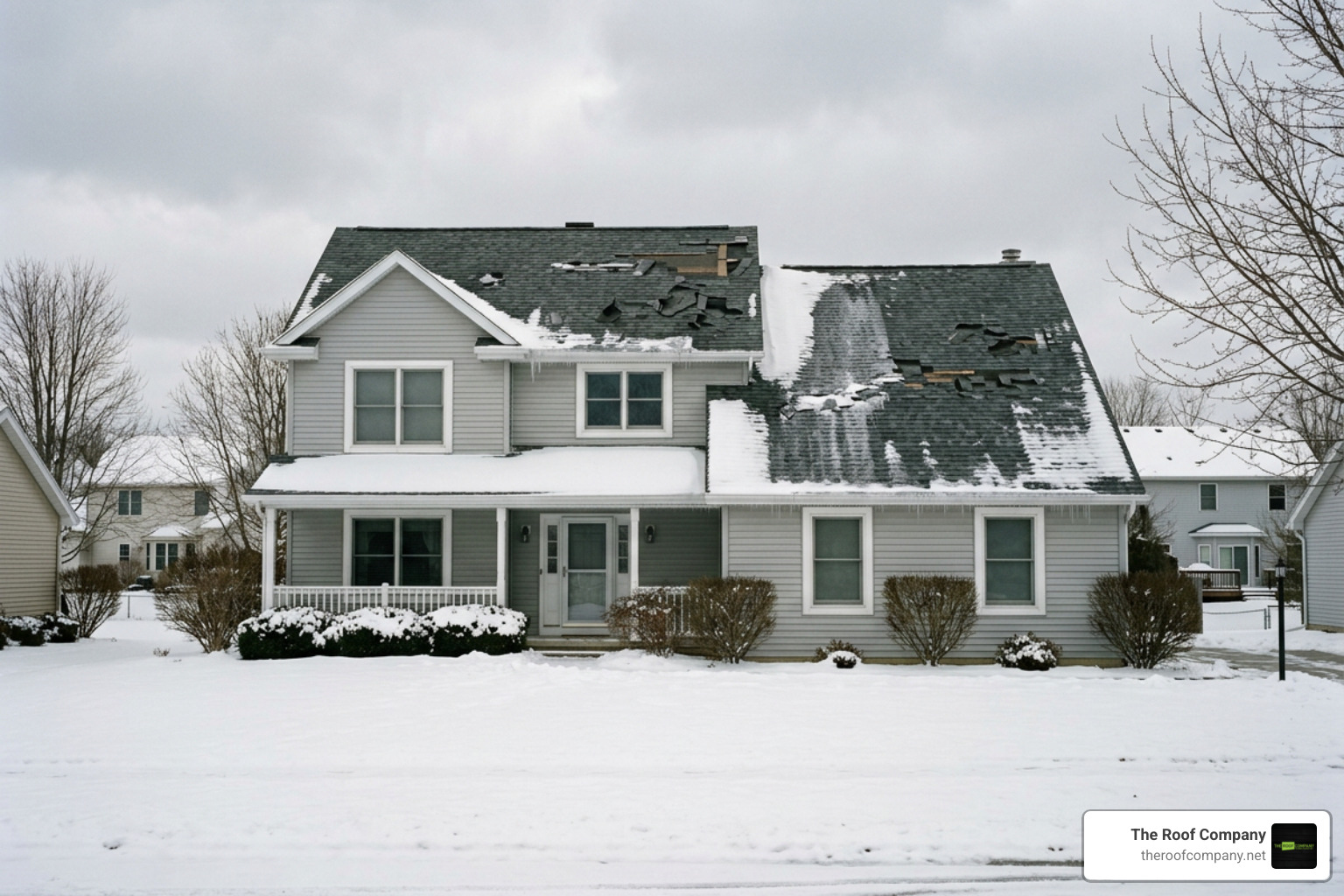
When storm damage strikes—whether from straight-line wind uplift or severe hail—you need to evaluate the full exterior structure. Wind can break the adhesive sealant on older shingles, allowing water to slip beneath the surface and soak the attic insulation. Reviewing our residential roof replacement guidelines helps you identify hidden structural vulnerabilities before water stains reach your ceiling drywall.
Proper preparation also means ensuring strict compliance with the State of Michigan’s Residential Building Code. Any legitimate contractor must hold an active license with the Michigan Department of Licensing and Regulatory Affairs (LARA). Unlicensed work exposes you to liability and potential code violations that can complicate future home sales.
Inspecting for Freeze-Thaw Damage and Aging Shingles
Michigan winters push roofing assemblies through relentless freeze-thaw cycles. Water enters tiny fissures during mild afternoons, expands as temperatures drop below freezing at night, and forces shingle granules loose.
Look closely for these clear warning signs:
- Granule Loss: Gutters filled with coarse, sand-like granules leave the underlying asphalt base exposed to UV degradation.
- Curling or Cupping Edges: Shingles curling upwards lose wind resistance and easily tear off during storms.
- Flashing Failure: Cracked or pulled-away sealants around chimneys, skylights, and vent pipes cause most interior leaks.
- Attic Moisture and Mold: Poor attic ventilation traps humid indoor air, creating frost on the underside of roof sheathing in winter and rot in summer.
- Structural Sagging: Depressions along rafter lines indicate compromised plywood decking that requires immediate structural repair.
For a deeper dive into diagnosing structural deterioration, explore our comprehensive roof replacement guide to protect your home’s integrity.
Navigating Local Michigan Permits and Insurance Claims
Securing the proper building permits is a mandatory legal requirement across Oakland, Livingston, Washtenaw, Macomb, and Wayne counties. Permits ensure that a municipal building inspector reviews the installation for critical safety factors, including nailing patterns, adequate intake/exhaust ventilation ratios, and proper ice and water shield application.
When filing an insurance claim after a major weather event:
- Document the Damage: Take detailed photos of hail dents on soft metals (gutters, downspouts, roof vents) and missing shingle tabs immediately.
- Perform Emergency Tarping: Mitigate further water intrusion to satisfy your policy’s basic coverage obligations.
- Verify Deductibles: Understand whether you carry a flat deductible or a separate percentage-based wind/hail deductible.
- Schedule the Adjuster Meeting: Have your roofing contractor present during the adjuster’s inspection to align on the full scope of loss.
Calculating New Roof Costs and Material Selection in Michigan
Accurate roof pricing involves multiple variables. Rather than relying on broad regional generalizations, calculating your investment depends on total square footage (measured in roofing “squares,” where 1 square equals 100 square feet), roof pitch, architectural complexity, waste factor, and labor demands.
Understanding average Michigan roofing costs gives you realistic expectations when reviewing estimates. For an average 2,000-square-foot home with a standard pitch, a complete tear-off and architectural shingle installation generally ranges from $8,500 to $16,000, depending on underlying decking repairs and access difficulty.
Before committing, review detailed data on expected roof replacement costs so you can balance premium durability against immediate budget limits.
Comparing Durable Materials for Michigan Winters
Choosing the right roofing material means matching long-term performance to Michigan’s specific weather demands:
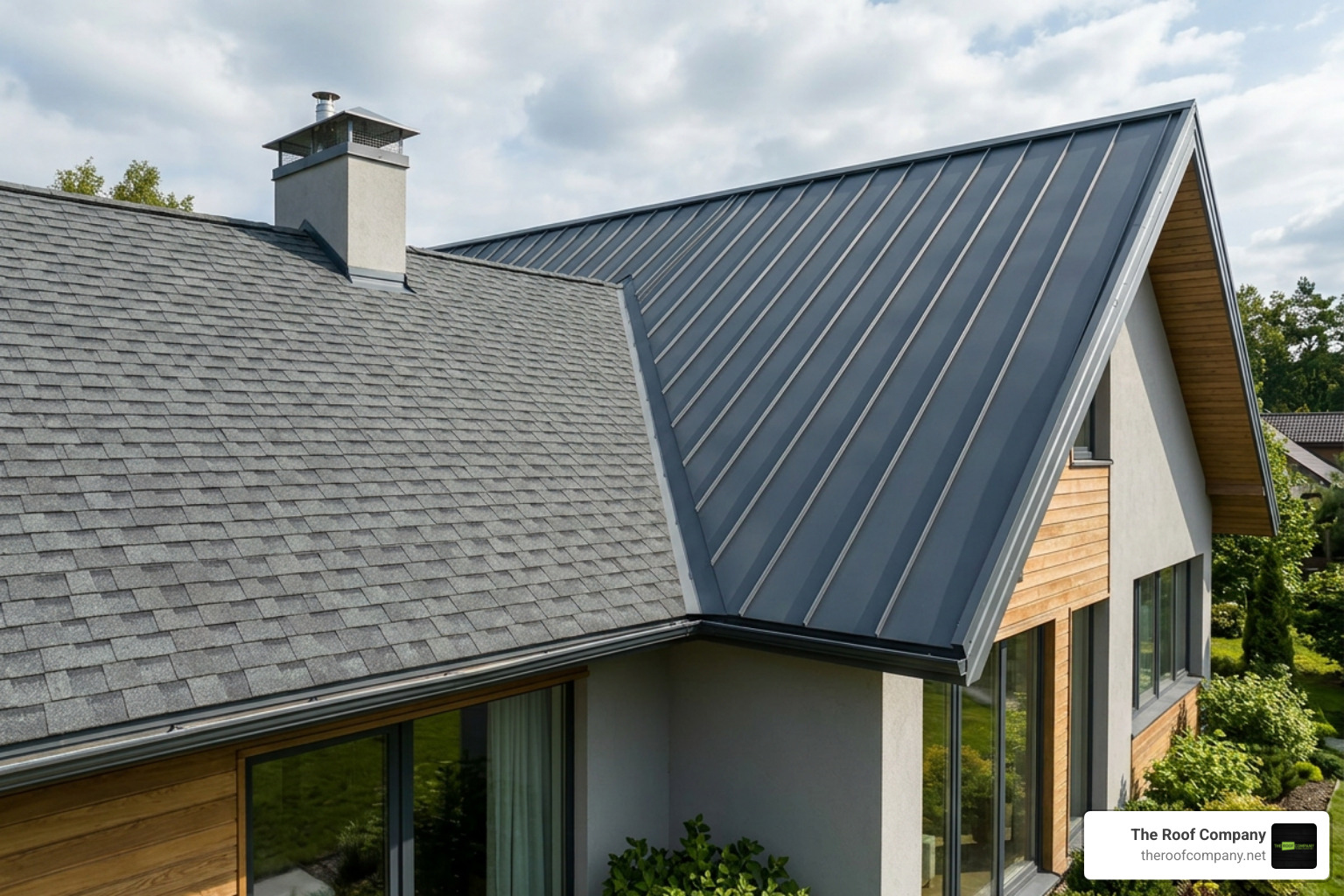
- Architectural Asphalt Shingles: The most common residential choice. High-definition dimensional shingles feature laminated construction that withstands wind speeds up to 130 mph while providing robust protection against seasonal temperature swings.
- Standing Seam Metal Roofing: Metal excels at shedding heavy snow loads and completely eliminates the risk of ice dam water intrusion. While the upfront investment is higher, metal roofs often last 50 years or longer.
- Impact-Resistant (Class 4) Shingles: Formulated with rubberized polymers (SBS) to withstand severe hail impacts without cracking the asphalt mat.
- Composite Slate and Shake: Delivers the timeless look of natural stone or cedar without the heavy structural weight or maintenance headaches.
For homeowners interested in long-term efficiency gains, selecting ENERGY STAR certified cool roofs can lower summer cooling loads by reflecting solar radiation. Review our breakdown of new roof pricing in Michigan to see how different materials impact your budget.
Full Tear-Off vs. Overlay: Hidden Cost Factors
Homeowners often ask if they can save money by nailing new shingles directly over the old layer. While an overlay may seem cheaper initially, it introduces severe long-term risks.
| Factor | Full Tear-Off Replacement | Shingle Overlay (Reroof) |
|---|---|---|
| Decking Inspection | Complete visual check; damaged/rotted wood replaced | Decking remains hidden; rotted wood stays in place |
| Ice & Water Shield | Installed directly onto bare wood deck along eaves and valleys | Cannot be properly installed over existing shingles |
| Weight Load | Standard single-layer weight | Doubles roof dead weight; risks structural strain under snow |
| Manufacturer Warranty | Full non-prorated material and labor warranty coverage | Frequently voided or significantly reduced |
| Average Lifespan | 25 to 50 years (depending on chosen material) | 12 to 18 years (trapped heat deteriorates shingles faster) |
Installing a second layer traps heat, accelerating shingle breakdown and preventing the installation of code-required ice barrier membranes along the eaves. Review the real risks of reroofing over existing shingles before choosing an overlay.
How to Finance Your Project Without Overpaying
A roof replacement is a major home investment. Fortunately, you don’t need to empty your savings to secure top-tier craftsmanship and durable materials.
Explore our breakdown of affordable roof replacement options to understand how seasonal scheduling and manufacturer rebates can lower your total project costs. Taking time to review your options for financing a roof replacement ensures you choose a plan tailored to your household’s financial goals.
Flexible Financing Solutions for Roof Replacement MI
Modern home improvement financing offers accessible alternatives to high-interest credit cards or complex equity lines:
- Short-Term 0% APR Financing: Many homeowners use promotional zero percent financing plans to spread project payments over 12 to 24 months without interest charges.
- Fixed-Rate Low-Interest Installments: For larger scopes or longer terms, explore various ways to pay for a new roof that offer steady, predictable monthly payments over 5 to 10 years.
- Home Equity Lines of Credit (HELOC): A solid option for larger remodeling projects, often providing tax-deductible interest benefits.
Learn more about safely financing a new roof to protect your investment without hidden fees or surprise prepayment penalties.
Long-Term Value, Energy Savings, and Resale ROI
A new roof delivers immediate returns in energy efficiency and home market value:
Upgrading attic insulation and balancing ridge-and-soffit ventilation prevents hot air pockets in the summer and stops warm air from melting snow into ice dams during winter.
The Installation Process and Hiring Guidelines
A quality roof replacement depends entirely on the precision of the installation crew. Even the highest-grade architectural shingles will fail prematurely if fastened with incorrect nailing patterns or installed over compromised underlayment.
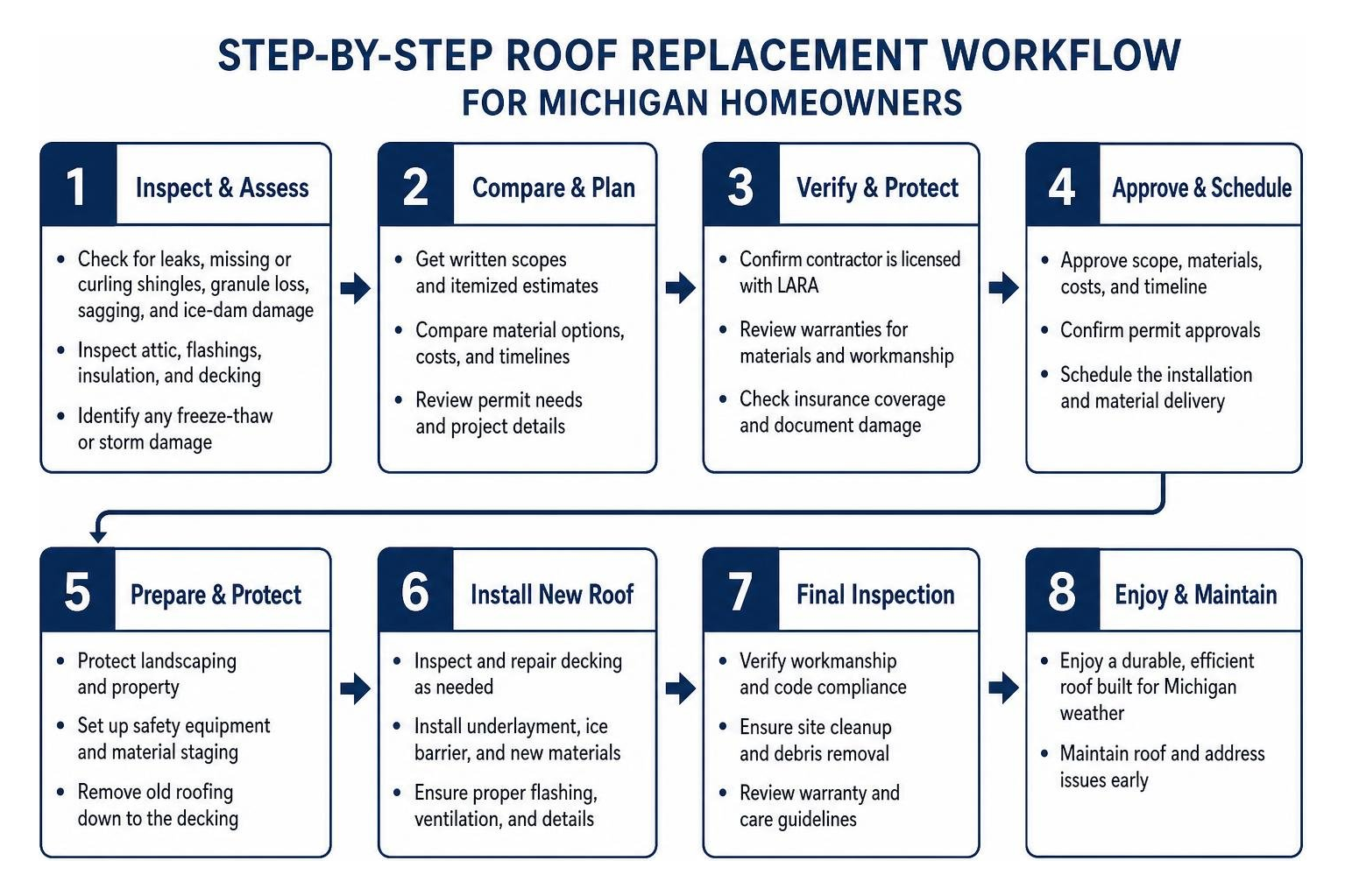
Our installation process follows strict quality and property protection steps:
- Site Preparation: We protect siding, landscaping, air conditioning units, and decks with durable tarps and plywood catch boards.
- Complete Tear-Off: Stripping down to the bare wooden substrate exposes cracked, delaminated, or rotted plywood sheathing.
- Substrate Repair: Damaged plywood is replaced to create a solid, level deck.
- Underlayment Installation: High-performance ice and water shields are applied along eaves, valleys, and flashing penetrations, followed by breathable synthetic underlayment across the remaining deck.
- Shingle Installation: Shingles are fastened using code-compliant 4-to-6 nail patterns positioned accurately along the manufacturer’s nailing strip.
- Thorough Site Cleanup: We use rolling magnetic sweepers across your lawn and driveway to capture stray nails and dispose of all debris in our dedicated mobile dumpsters.
To see each phase in detail, read our step-by-step new roof installation guide.
Step-by-Step Installation Timeline and Best Seasons
Most residential roof replacements take 1 to 2 days to complete, assuming typical roof sizes, moderate pitches, and dry weather conditions.
- Late Spring to Autumn (May – October): The peak roofing season across Michigan. Consistent warm weather allows asphalt shingle adhesive strips to seal quickly.
- Late Autumn (November): An excellent time to beat winter freezes. Schedule early to ensure proper sealant activation before temperatures drop significantly.
- Winter Replacements: While emergency winter replacements are entirely possible, experienced crews must hand-seal shingles or store materials in heated environments to prevent brittleness during cold-weather handling.
Learn about the best time of year to replace a roof to plan your project around optimal weather windows.
Vetting Certified Experts for Roof Replacement MI
Never let an unvetted contractor work on your home. Use this checklist when comparing local roofers:
- State Builder’s License: Verify active status through Michigan LARA.
- Comprehensive Insurance: Require written certificates for both General Liability ($1M+ minimum) and complete Workers’ Compensation coverage.
- Manufacturer Certifications: Certified factory-trained installers provide exclusive access to extended, non-prorated system warranties.
- Transparent Workmanship Guarantees: Look for contractors offering lifetime labor warranties backed by real local roots.
Explore our guide on hiring a reliable roofing contractor for practical vetting advice. Homeowners can also review our dedicated regional resources:
- Vetting Oakland County roofers
- Trusted Livingston County roofers
- Oakland County roof replacement specialists
- Livingston County roofing services
Frequently Asked Questions About Michigan Roof Replacement
How much does an average roof replacement cost in Michigan?
The total cost typically ranges between $8,500 and $16,000 for standard architectural asphalt shingles on an average-sized home. Final pricing depends on square footage, pitch, accessibility, rotted decking replacement, and chosen underlayment upgrades.
How long does a roof replacement take on a Michigan home?
A professional crew typically completes a residential tear-off and installation in 1 to 2 days. Complex rooflines, severe wood rot, or adverse weather conditions like sudden rainstorms may extend the project timeline slightly.
Will homeowners insurance cover my roof replacement in Michigan?
Homeowners insurance generally covers roof replacements when damage is caused by sudden storm events, such as wind uplift, fallen tree limbs, or severe hail. Insurance does not cover standard wear and tear, age-related deterioration, or damage resulting from deferred maintenance.
Protect Your Michigan Home with Confidence
Your roof is your home’s first line of defense against freezing winter storms and heavy summer rains. Proactive planning, selecting quality cold-weather materials, and working with licensed, insured professionals prevents costly interior leaks and preserves structural value.
At The Roof Company, we provide homeowners across Novi, South Lyon, Oakland County, Livingston County, Washtenaw County, Macomb County, and Wayne County with transparent estimates, efficient installations, and unmatched lifetime guarantees.
Ready to protect your home? Schedule your free inspection and explore our professional roof replacement services today.


