


Roof Replacement Insurance: The Basics Before You File a Claim
Roof replacement insurance can pay for a repair or a full new roof when sudden damage comes from a covered event, such as hail, wind, fire, lightning, or a fallen tree. It usually will not pay for an old roof that simply wears out, a long-term leak, poor maintenance, or faulty installation.
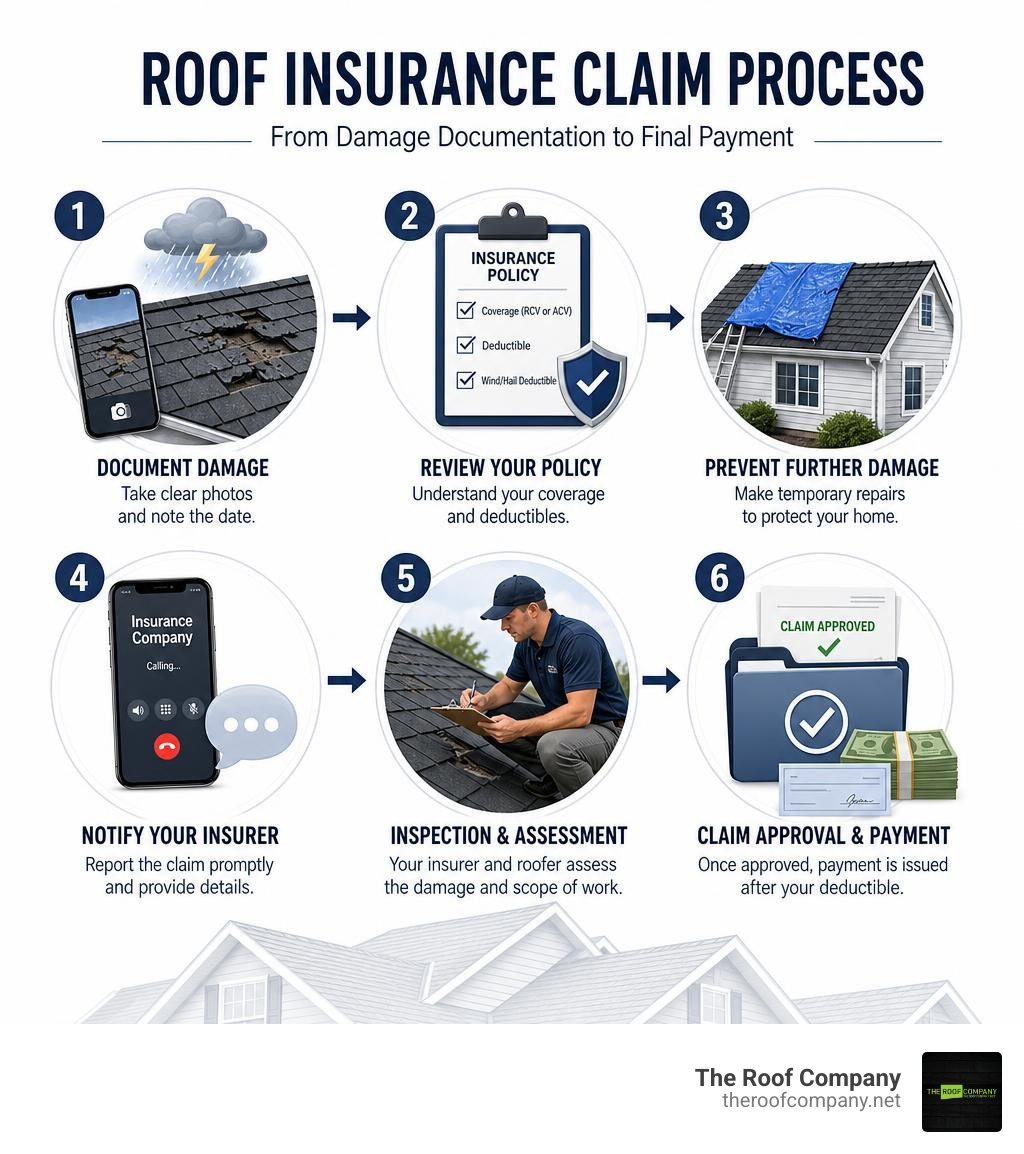
Before filing a claim:
- Check whether your policy pays Replacement Cost Value (RCV) or Actual Cash Value (ACV).
- Find your deductible, especially any separate wind or hail deductible.
- Photograph the damage, note the storm date, and make temporary repairs to stop further water damage.
- Notify your insurer promptly and get a detailed inspection from a licensed local roofer.
The difference can be thousands of dollars. The average U.S. roof repair costs about $1,147, while a full replacement averages roughly $11,500. Insurance only pays when the loss is covered, the damage supports the approved scope of work, and the claim amount exceeds your deductible.
I am Darren, co-owner of The Roof Company, and I bring more than 30 years of roofing experience serving homeowners across South Lyon, Novi, and Southeast Michigan. In this guide, I will help make roof replacement insurance easier to understand so you can document damage, ask better questions, and avoid costly surprises.
Understanding Roof Replacement Insurance Coverage and Policy Types
When severe weather rolls through Southeastern Michigan, your homeowners insurance policy acts as your financial safety net. But not all policies offer the same level of protection. Standard home insurance includes dwelling coverage, which safeguards the physical structure of your house—including your roof system.
Insurance is designed to protect against sudden, accidental loss. It is not a home warranty, nor is it a maintenance plan. If straight-line winds tear shingles off your home in Oakland County or a heavy branch crashes down during a thunderstorm in Livingston County, your policy is structured to step in. However, if water leaks into your attic because shingles are 25 years old and deteriorating from standard wear and tear, insurance will almost certainly deny the claim.
To understand how much financial support you will receive, you must check your policy’s settlement terms. For a comprehensive overview of budgeting and installation standards, our Home Roof Replacement Guide 2026 breaks down everything you need to know about structural materials and timelines.
| Policy Feature | Replacement Cost Value (RCV) | Actual Cash Value (ACV) |
|---|---|---|
| Payout Basis | Today’s retail cost to replace with brand-new materials | Today’s retail cost minus accumulated depreciation (age & wear) |
| Out-of-Pocket Impact | Limited to your standard policy deductible | Deductible plus the entire depreciated amount of the old roof |
| Disbursement Schedule | Paid in two separate checks (initial ACV check, then recoverable depreciation upon job completion) | Single payout check based on depreciated market value |
| Long-Term Protection | Fully restores your roof to modern building code standards without extra cost | Homeowner must fund the gap between depreciated value and new build cost |
RCV vs. ACV in Roof Replacement Insurance Policies
The single most critical detail on your insurance declarations page is the distinction between Replacement Cost Value (RCV) and Actual Cash Value (ACV).
Under an RCV policy, your insurance carrier pays the full cost to replace your damaged roof with brand-new materials of comparable quality, minus your deductible. This payout structure typically operates on a two-check system:
- First Check (ACV Payout): The insurer issues an initial payment representing the depreciated value of your current roof minus your deductible.
- Second Check (Recoverable Depreciation): Once the work is fully completed by a licensed contractor and final invoices are submitted, the carrier releases the withheld depreciation balance.
Under an ACV policy, your insurer only pays what your roof is worth at the moment of damage. Roof materials naturally lose value over time—roughly 4% to 5% per year for standard asphalt shingles. If a 15-year-old roof has sustained severe storm damage, an ACV settlement deducts around 60% to 75% of the total claim value for depreciation. Because this depreciation is non-recoverable on an ACV policy, you are left paying thousands of dollars out of pocket simply to bridge the gap.
Covered Perils vs. Excluded Roofing Damage
Homeowners policies list specific “perils” (causes of loss) that qualify for coverage. In Michigan, the most frequent covered perils include:
- Hail Impacts: Hailstones bruising shingle mats, fracturing fiberglass backing, or dislodging protective mineral granules.
- High Wind Damage: Severe gusts creasing, tearing, or ripping away shingles, and lifting flashing components.
- Fallen Objects: Tree limbs or entire trees collapsing onto the roof deck during severe weather.
- Fire and Lightning: Direct strikes or fire damage compromising roof structural integrity.
- Sudden Ice Dam Intrusion: Internal water damage resulting from severe, sudden winter freeze-and-thaw cycles (depending on policy endorsements).
Conversely, insurance policies consistently exclude predictable or preventable damage, including:
- Normal Wear and Tear: Gradual deterioration, granule loss from age, or general weathering.
- Lack of Maintenance: Rot, mold, or long-term leaks caused by clogged gutters or neglected flashing.
- Cosmetic Damage: Minor indentations on metal flashing or shingles that do not impair the roof’s water-shedding functionality (often excluded under specific policy cosmetic riders).
- Pest and Rodent Infestation: Damage caused by squirrels, raccoons, bats, or insects burrowing into decking or fascia.
- Faulty Installation: Structural failures or moisture leaks resulting from improper workmanship by previous unqualified contractors.
Navigating Deductibles and Out-of-Pocket Replacement Costs
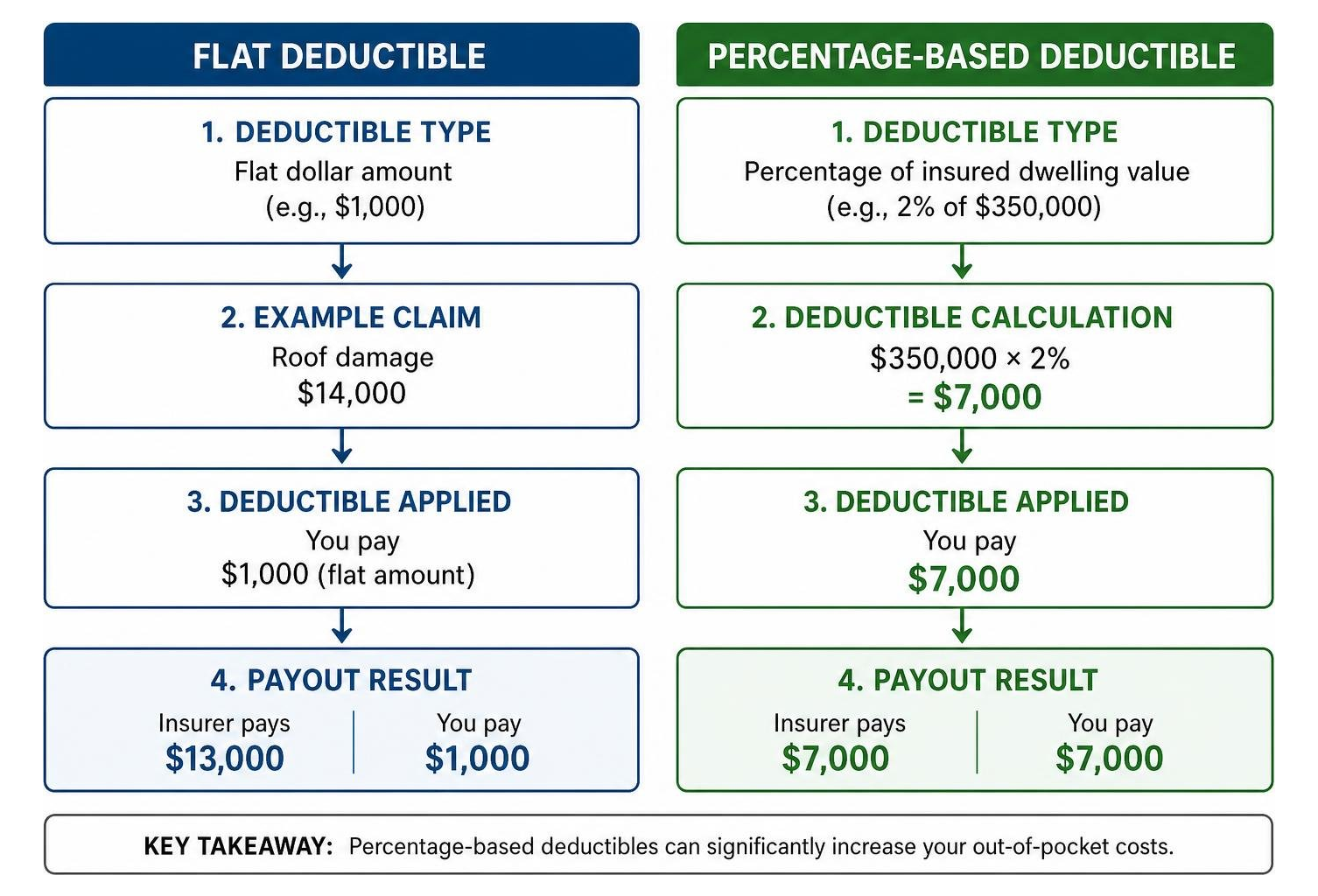
Your insurance deductible is the predetermined amount you must pay out of pocket before your insurer covers the remaining loss. When filing a claim, understanding how your deductible is calculated is essential for establishing realistic budgets. Homeowners researching what to expect to pay for a roof replacement should always start by checking whether their policy has a flat or percentage-based deductible.
In many wind-prone regions, carriers have shifted away from flat deductibles to percentage-based wind and hail deductibles. For instance, if your home is insured for $350,000 and carries a 2% wind deductible, your mandatory out-of-pocket cost is $7,000 before insurance pays a dime.
How Deductibles Affect Overall Replacement Budgets
If a major windstorm causes $14,000 worth of damage to your roof and you hold a $1,000 flat deductible, the carrier covers $13,000 (subject to RCV terms), leaving you with a predictable $1,000 expense.
However, if your policy holds a high percentage-based deductible or settles on an ACV schedule, the financial burden shifts dramatically onto the homeowner. Navigating unexpected out-of-pocket expenses often requires exploring practical options for financing a roof replacement to cover high deductibles or depreciated claim gaps without draining emergency savings.
How Roof Age and Condition Impact Roof Replacement Insurance
Insurance carriers have dramatically tightened their underwriting criteria across Michigan. When a roof reaches 15 to 20 years of age, insurance companies frequently take one of three actions:
- Mandatory ACV Conversion: Automatically converting your coverage from RCV to ACV, slashing your claim payouts.
- Inspection Mandates: Demanding a comprehensive roof inspection to confirm remaining useful life.
- Non-Renewal Notices: Refusing to renew homeowner policies unless the roof is completely replaced. This trend was highlighted in a recent Wayne County news report on roof insurance non-renewal, where long-time residents faced sudden policy cancellations due purely to aging shingle systems.
Low-income homeowners facing critical roof failures who cannot secure private financing or full insurance settlements may find support through local municipal assistance, such as the Washtenaw County Roof Replacement Program.
Step-by-Step Process for Filing a Roof Damage Insurance Claim
Navigating a property insurance claim can feel daunting, but following a structured step-by-step sequence protects your rights and maximizes your payout.
Documenting Storm Damage and Filing Deadlines
Timing and meticulous evidence collection are critical. Immediately following a storm:
- Record the Date of Loss: Note the exact date and time the severe weather event occurred. Cross-reference local storm tracking databases or weather alerts.
- Capture Clear Visuals: Take wide-angle and close-up photos and video footage of fallen tree limbs, missing shingle tabs, dislodged fascia, and interior ceiling water marks.
- Mitigate Further Loss: Homeowners have a legal duty to prevent ongoing damage. Install tarps over exposed roof decking or place buckets under active leaks. Keep all receipts for temporary tarps and emergency repairs, as these are reimbursable under your claim.
- Adhere to Policy Deadlines: Most insurance policies require homeowners to report property damage promptly. Delaying notification can give carriers grounds to claim the damage resulted from long-term neglect rather than a single storm event.
Working with Adjusters and Securing Contractor Estimates
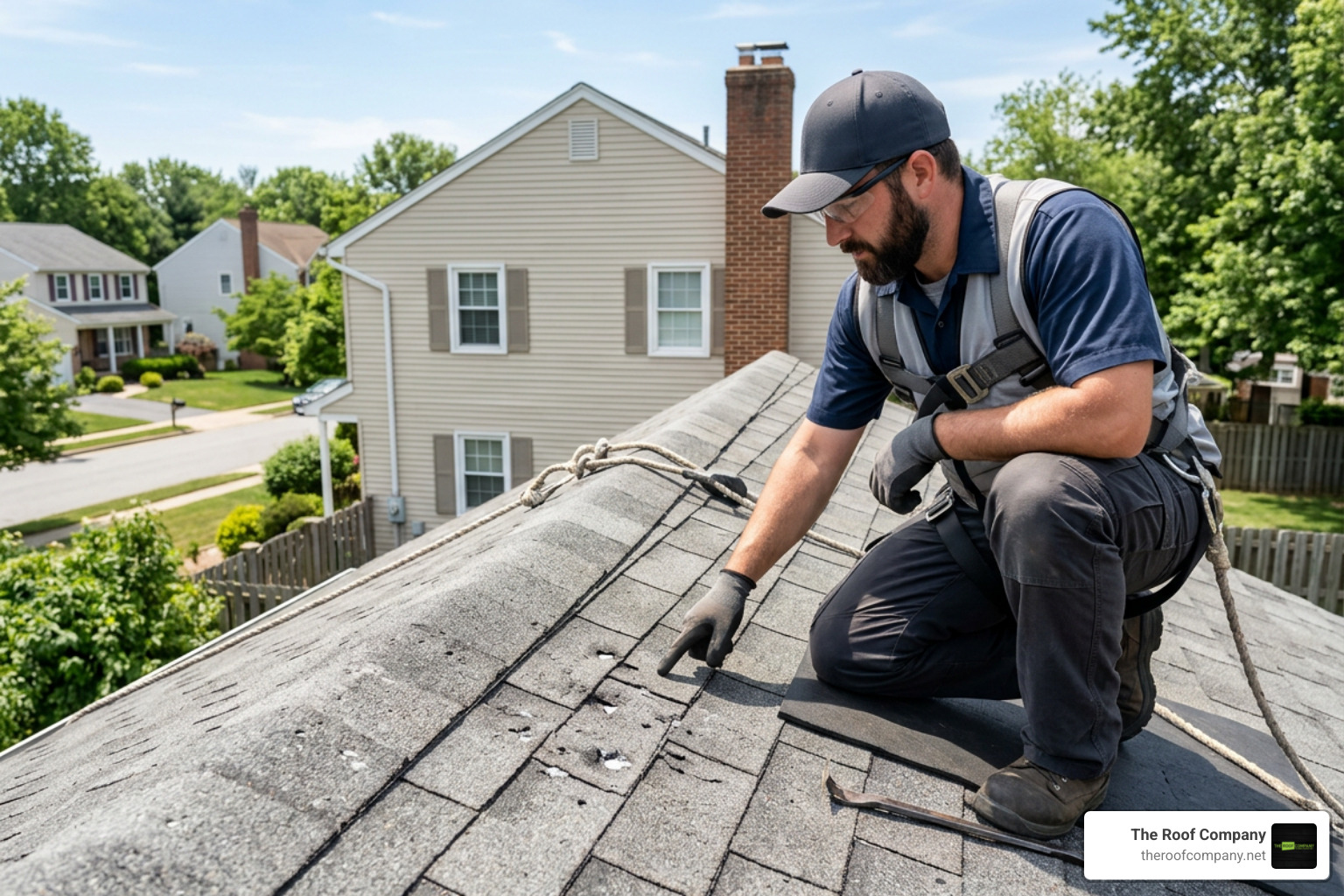
Before calling your insurance carrier’s claim hotline, we strongly advise having a reputable, local roofing specialist inspect your roof. An experienced contractor will verify whether your damage warrants filing a claim, preventing you from logging a claim on your record when the damage is below your deductible.
When the carrier assigns an independent or staff adjuster to inspect the property, arrange for your contractor to attend the on-site walkthrough. Adjusters assess dozens of homes weekly and can overlook subtle hail bruising, damaged flashing, or torn underlayment. Having your contractor walk the roof alongside the adjuster ensures all damages are marked and accounted for on the initial scope of loss. For detailed technical standards and local installation methods, consult our comprehensive guide to roof replacement in Michigan.
Turning Partial Repair Offers into Full Roof Replacements
Insurance adjusters frequently write initial estimates covering only localized patch repairs—such as replacing 15 or 20 damaged shingles—rather than approving a complete replacement. However, attempting partial repairs on older or severely storm-damaged roofs is often structurally impossible or legally non-compliant.
Matching Laws, Discontinued Shingles, and Code Compliance
There are three primary avenues we leverage to turn an insufficient repair estimate into an approved full roof replacement:
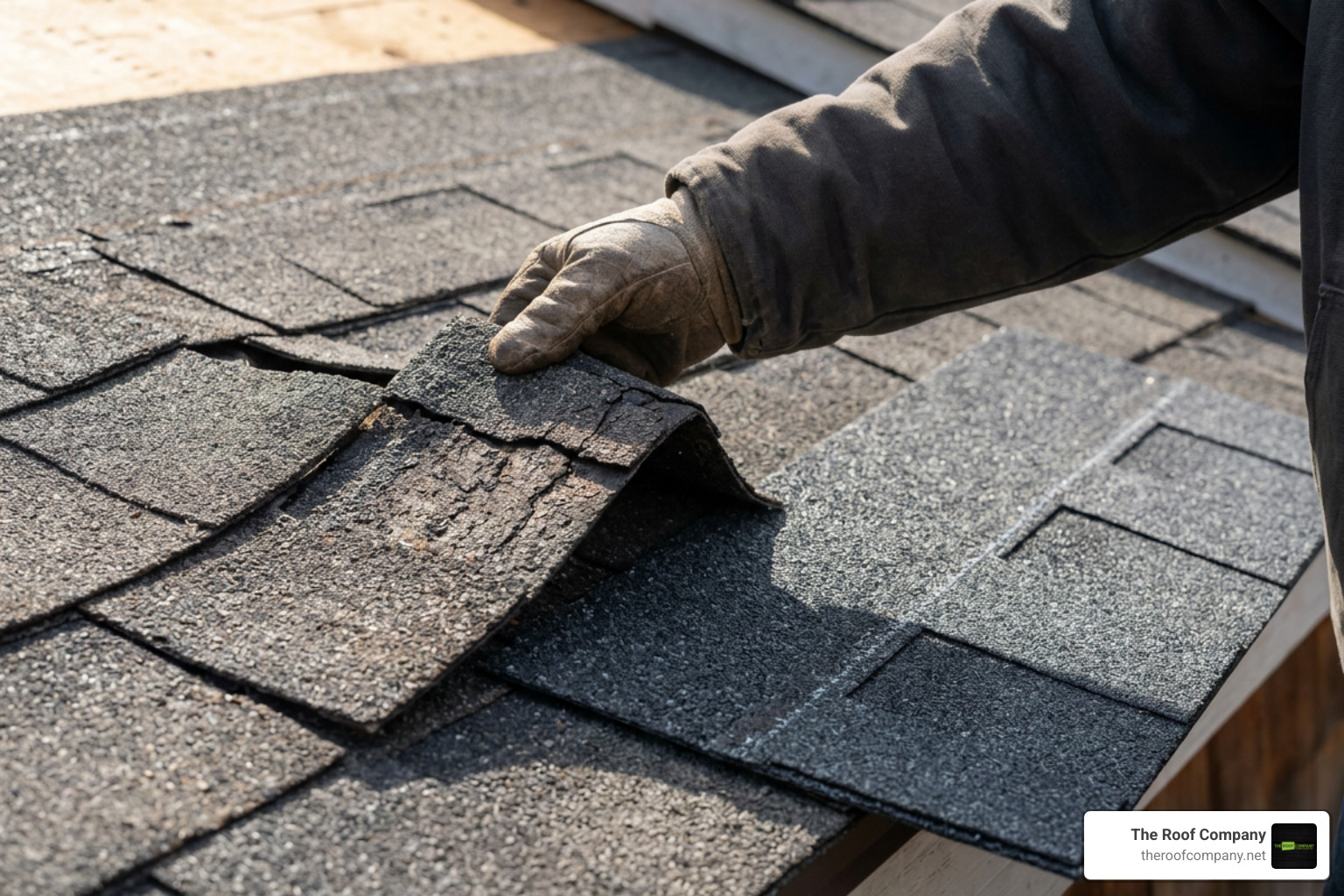
- The Shingle Brittleness Test: When shingles age, exposure to UV light causes asphalt to lose its natural oils and flexibility. When an adjuster suggests slipping a new shingle into an existing 12-year-old roof, surrounding shingles must be bent backward to nail the replacement into place. On an aged roof, bending adjacent shingles causes them to crack and break. If a roof cannot be repaired without damaging surrounding materials, a full slope or full roof replacement is required.
- Discontinued Shingles and Aesthetic Matching: Shingle manufacturers regularly update product lines, dimensions, and color profiles. If your existing shingle is discontinued and unavailable in the current supply chain, repairing a visible section creates an unsightly, mismatched patchwork. Many policies and state standards require uniform appearance within visual line-of-sight.
- Building Code and Ordinance Upgrades: Modern Michigan residential building codes require specific protective measures, such as installing continuous ice and water shield membranes along the eaves and valleys. If municipal codes prohibit patching over non-compliant underlayment, your insurer must fund the necessary code-required upgrades under your policy’s Ordinance or Law provision.
Overcoming Denials, Lowball Estimates, and Supplementing Claims
If an insurance carrier denies your claim or provides an estimate that fails to cover actual material and labor costs, do not panic. You have clear recourse:
- File an Insurance Supplement: Contractors use the exact same estimating software as major insurance carriers (Xactimate). We regularly submit itemized supplements documenting essential missing line items—such as starter strip shingles, ridge cap shingles, ice dam barriers, and disposal fees.
- Request a Re-Inspection: If an adjuster missed substantial damage, you have the right to request a second inspection with a different field adjuster.
- Invoke the Appraisal Clause: If you and your carrier cannot agree on the fair financial value of the loss, your policy includes an appraisal provision allowing independent appraisers and an impartial umpire to establish a binding settlement figure.
- Hire a Licensed Public Adjuster: For massive or disputed claims, a licensed public adjuster can advocate solely on your behalf for a percentage of the final settlement.
Avoiding Roofing Contractor Insurance Scams and Fraud
Severe weather events inevitably attract predatory “storm chaser” roofing crews who travel from state to state knocking on doors. Protecting your home and finances requires recognizing common contractor scams:
Always verify that your roofing partner holds a permanent local address, active Michigan residential builder licensing, comprehensive general liability coverage, and workers’ compensation insurance.
Frequently Asked Questions About Roof Replacement Insurance
Will filing a roof insurance claim cause my premiums to increase?
Filing a claim for an “act of God” or weather-related catastrophic peril (such as widespread hail or wind) generally does not single out an individual homeowner for immediate rate hikes. However, insurance carriers frequently adjust overall regional base rates across entire zip codes following major storm events to account for collective loss trends. Additionally, logging multiple property claims within a three-year period can place you in a higher risk tier or threaten policy renewal.
Can I keep the leftover money from an insurance claim payout?
On an RCV policy, no. You only receive the initial depreciated payment upfront. The insurance company releases the withheld recoverable depreciation only after receiving final itemized invoices proving that the full replacement was completed for the agreed amount. Submitting an inflated invoice to collect leftover funds is insurance fraud. On an ACV policy, you receive a single lump-sum check reflecting the depreciated cash value; while you may choose how to allocate those funds, taking a payout without fixing the damage will cause your carrier to exclude the roof from future storm coverage.
How long do I have to file a claim after a storm?
Policy notification windows vary by carrier and state regulations, generally ranging between 6 months to 1 year from the date of loss. However, you should notify your insurer within days of discovering damage. Delaying a claim allows everyday weathering to complicate the damage profile, giving adjusters an opening to argue that the damage resulted from gradual wear and tear rather than the specific storm event.
Conclusion
Navigating a roof insurance claim does not have to be an overwhelming ordeal. By understanding the critical differences between RCV and ACV coverage, recognizing how deductibles affect your final balance, documenting storm damage promptly, and enforcing building code requirements, you can ensure your home receives the complete protection it deserves.
At The Roof Company, we bring decades of hands-on local roofing expertise across Novi, South Lyon, and all of Southeastern Michigan. We provide honest, detailed roof assessments, transparent documentation, and seamless communication to help you navigate every stage of your project with complete peace of mind. If your home has weathered a recent storm or if you need expert guidance on your roofing system, contact our team today to explore our professional roof replacement services.


