


Using a Roof Inspection Cost Calculator for Accurate Budgeting
A standard roof inspection typically costs $150 to $400, with a national average near $220. Drone surveys range from $150 to $450, while infrared thermal scans run $300 to $700. A roof inspection cost calculator turns those benchmarks into a tailored estimate by factoring in roof size, pitch, height, material, and inspection type.
Rather than relying on vague ballpark figures, a calculator applies those property variables to your specific home. Whether you are dealing with a modest ranch in Livingston County or a sprawling two-story colonial in Oakland County, these digital tools let you explore how different service levels impact your bottom line before you sign an agreement.
How a Roof Inspection Cost Calculator Works
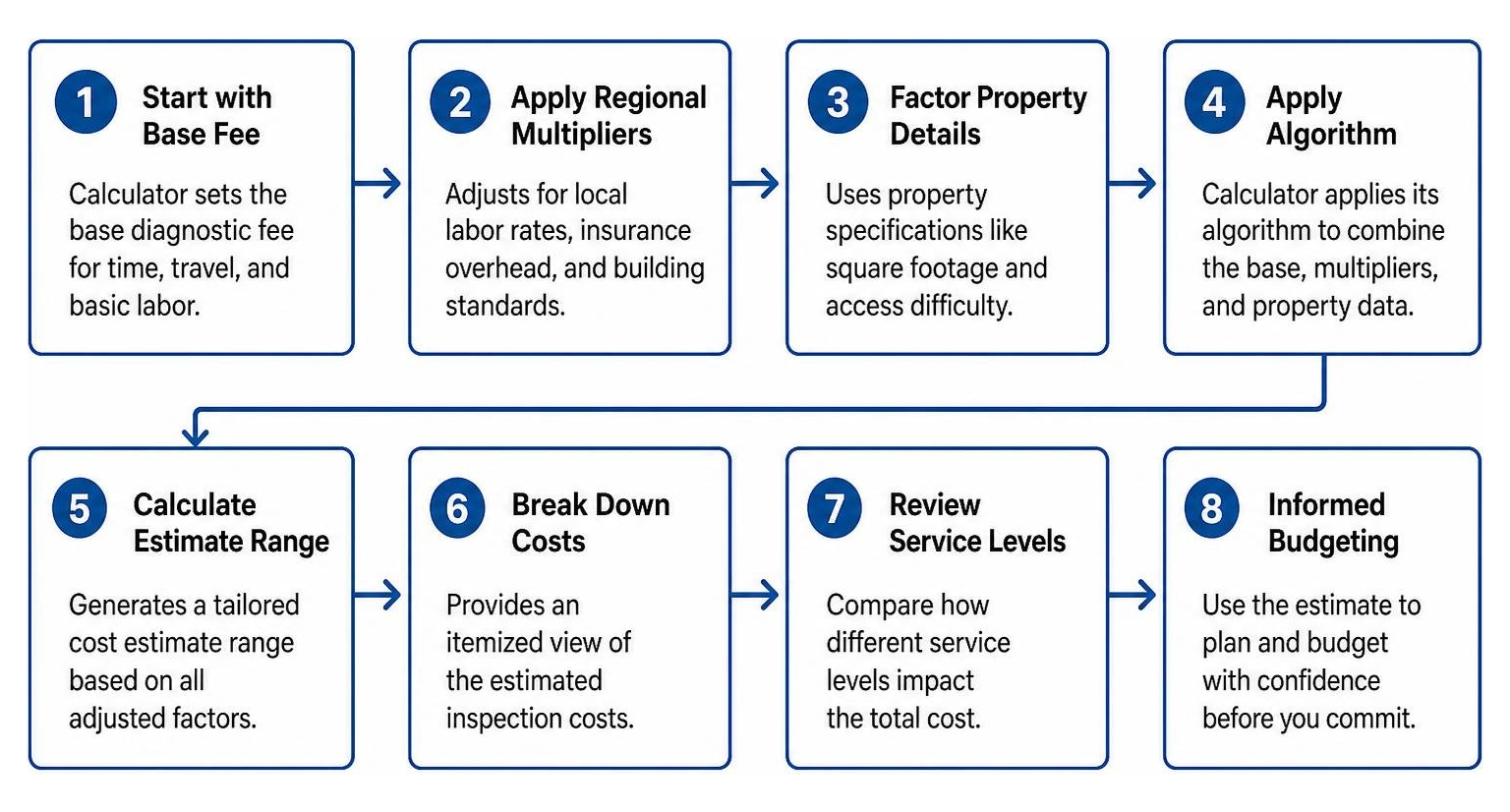
At its core, a cost calculator applies an algorithmic baseline to your property specifications. The tool starts with a base diagnostic fee—typically reflecting the time, travel, and basic labor required to mobilize an inspector to your site.
From there, the software applies regional multipliers. Labor rates, business insurance overhead, and local building standards differ significantly depending on your market. The calculator adjusts for these economic variables and factors in physical property data—such as overall square footage and access difficulty—to produce a tailored estimate range.
Essential Data Inputs for a Roof Inspection Cost Calculator
To get the most accurate result from a digital tool, you need to provide accurate property details:
- Square Footage or Roofing Squares: Total roof area directly influences the time an inspector spends on-site. (1 roofing square = 100 square feet).
- Roof Pitch and Slope: Steeper roofs require specialized safety harnesses and ropes, which adds labor time.
- Building Height and Stories: A single-story ranch requires minimal ladder work, while two-story and three-story properties carry higher safety requirements.
- Roofing Material: Walking on standard architectural shingles requires different precautions than assessing fragile slate, tile, or metal panels.
- Property Age and Known Condition: Older roofs nearing the end of their lifespan often demand deeper decking and ventilation assessments.
- Geographical Location: Your specific county or zip code ensures local labor benchmarks and travel fees are applied accurately.
2026 Roof Inspection Costs by Assessment Type
Inspection pricing depends heavily on the evaluation method chosen. While a standard visual check provides a solid overview of shingle health, specialized technology is often required to diagnose elusive moisture leaks or inspect steep, unsafe pitches.
| Inspection Type | Typical Cost Range (2026) | Best Use Case | Key Deliverable |
|---|---|---|---|
| Visual Physical Walk-On | $150 – $400 | Routine checkups, pre-sale overviews | 12-point condition checklist & exterior photos |
| Drone Aerial Survey | $150 – $450 | Steep pitches, multi-story homes, fragile materials | High-resolution 4K imagery & aerial mapping |
| Infrared Thermal Imaging | $300 – $700 | Elusive leak tracing, flat roofs, moisture detection | Thermal anomaly scans & moisture boundary maps |
| Wind Mitigation Assessment | $75 – $175 | Insurance discounts, severe weather prep | State/insurer compliance forms |
| Comprehensive Package | $800 – $1,500 | Real estate disputes, pre-purchase due diligence | Complete visual, drone, thermal, and attic report |
Visual Physical Walk-On Inspections
A traditional physical walk-on inspection remains the industry standard for accessible roofs. During this assessment, a technician physically climbs onto the roof surface to inspect shingles, test for soft decking, examine step and counter flashing around chimneys, check valley linings, and assess gutter conditions.
This evaluation also includes an attic walk-through to check for daylight penetration, dark moisture stains, proper insulation levels, and balanced ventilation. For homeowners seeking routine maintenance checks or post-storm assessments, scheduling professional roof inspection services ensures every physical component is closely examined.
Drone Aerial Surveys and 3D Modeling
When roofs feature steep slopes, high peaks, or fragile surfaces like aged slate or Spanish tile, drone surveys provide a safe and thorough alternative. Operating under FAA Part 107 guidelines, certified drone pilots capture ultra-high-resolution 4K imagery of ridges, valleys, and chimney masonry without setting foot on delicate shingles.
Modern drone inspections can also incorporate videogrammetry, turning aerial footage into high-precision 3D digital models. Adding 3D model processing generally adds $99 to $199 to the base flight cost, but it provides exact spatial and pitch measurements that eliminate the need for manual re-inspections during insurance claims.
Infrared Thermal Imaging and Moisture Detection
Thermal imaging inspections utilize infrared cameras to detect subtle temperature variations across the roof deck. Because trapped water retains heat differently than dry insulation and timber, thermal scans easily highlight hidden moisture intrusion long before it shows up as water stains on your drywall.
Thermal imaging is particularly useful on low-slope and flat residential surfaces, where ponding water can slowly saturate subsurface membranes. Finding wet insulation early prevents widespread deck rot and avoids extensive structural remediation later.
Wind Mitigation and Insurance Certifications
Specialized wind mitigation inspections evaluate your home’s structural resilience against high-wind events. The inspector documents roof geometry, decking nail patterns, roof-to-wall ties (such as hurricane clips or wraps), and opening protections.
A wind mitigation report costs between $75 and $175, but the payoff can be substantial. In many wind-prone zones, submitting an official certification form to your homeowner’s insurance provider can lower annual premiums by $300 to $1,200.
Key Factors That Drive Inspection Pricing Up or Down
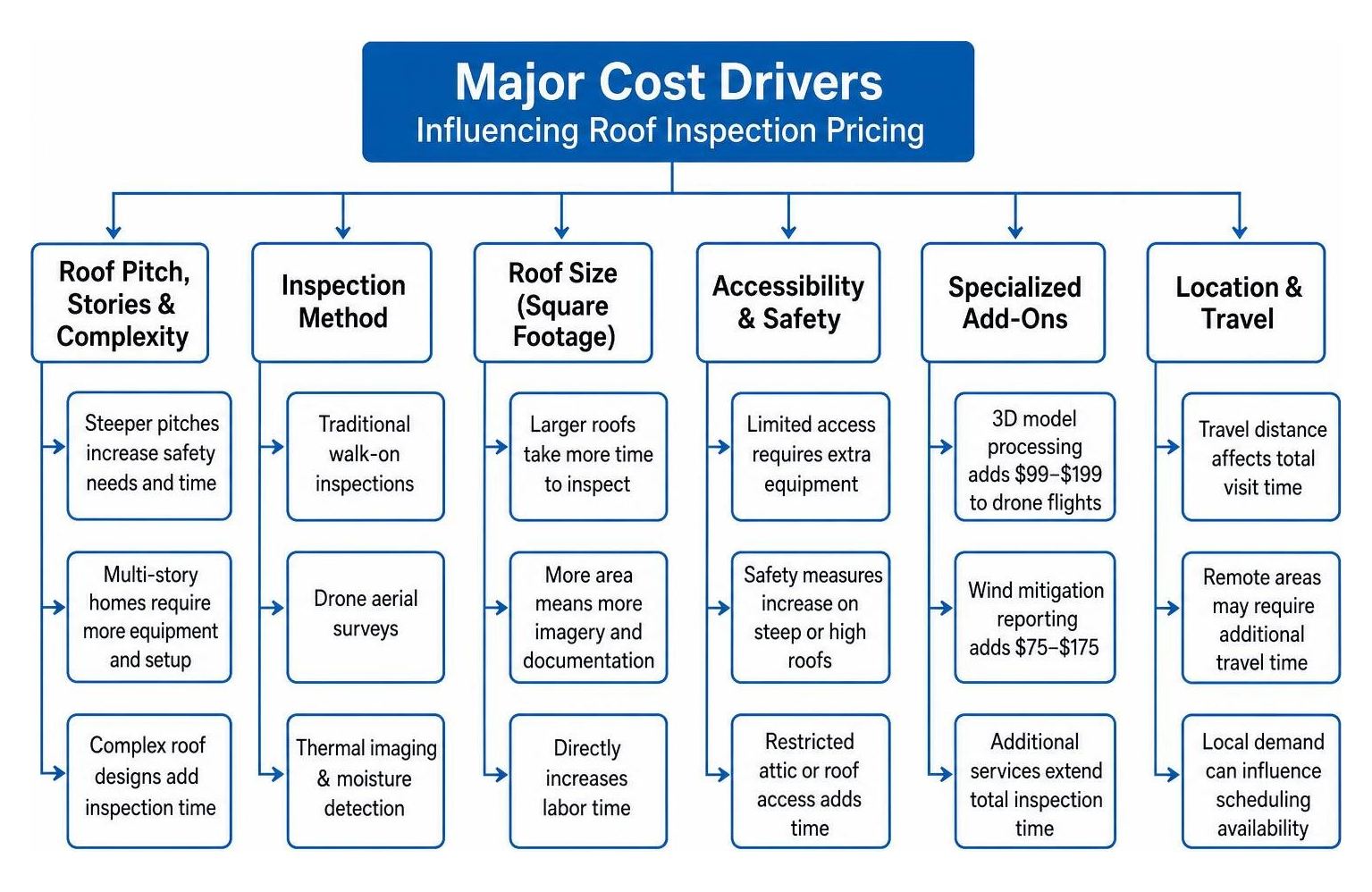
While national averages sit near $220, actual quotes can range from $75 for a simple walk-over on a basic ranch to over $700 for complex evaluations. Several physical and operational factors drive these price adjustments.
Roof Pitch, Stories, and Architectural Complexity
Roof pitch—the steepness of your roof expressed as a ratio over a 12-inch run—has a major impact on labor costs:
- Low to Moderate Slopes (4/12 to 8/12): Easy to walk safely; standard pricing applies.
- Steep Slopes (9/12 to 12/12+): Inspectors must set up ropes, anchor harnesses, and specialized footwear to adhere to OSHA fall-protection regulations (29 CFR 1926.501), often adding a 20% to 30% surcharge.
- Multi-Story Heights: Two-story homes typically add 10% to the base fee, while three-story properties can add 30% or more due to extended ladder setup times.
- Architectural Layout: Roofs featuring complex dormers, intersecting valleys, turrets, and parapets require significantly more diagnostic time than a straightforward gable layout.
Roofing Material and Accessibility Challenges
The material on your roof influences how an inspector moves across the surface. Standard 3-tab or architectural asphalt shingles are durable under foot traffic, allowing for fast, straightforward inspections.
By contrast, clay tile, natural slate, and cedar shakes are delicate and can crack under an inspector’s weight. These materials require specialized walk-boards, foam cushions, or drone equipment to prevent accidental damage during the survey. Metal standing-seam panels also require extra care to avoid scuffing the protective factory finish.
Regional Labor Variations and Market Rates
Inspection fees mirror local labor indices, contractor insurance rates, and regional living costs. Metropolitan and suburban areas with higher labor costs sit 15% to 35% above national baselines.
When planning your overall home maintenance budget, referencing regional roofing cost benchmarks helps provide context for how local wages shape both diagnostic inspections and downstream repair rates.
Paid Independent Assessments vs. Contractor Estimates
Homeowners frequently ask: Should I pay for an independent inspection, or simply take advantage of a free contractor assessment? Both options serve specific purposes.
When you need an unbiased opinion for a property purchase or an insurance claim, paying for an independent assessment gives you an objective evaluation. However, when you need actionable repairs or suspect storm damage, partnering with a dependable team via hiring a reliable roofing company gives you a clear repair path backed by manufacturer warranties.
What Standard and Comprehensive Reports Include
A thorough, professional roof inspection produces a detailed written report rather than just a verbal summary.
A comprehensive report should include:
- Clear photos of all slopes, penetrations, and flashings
- Exterior condition assessments of shingles, sealants, and ridge caps
- Chimney flashing, counter-flashing, and masonry condition
- Gutter slope, downspout clearance, and fascia board integrity
- Interior attic checks for deck rot, mold, daylight leaks, and ventilation
- An itemized defect list organized by repair urgency
- An estimated remaining service life for the roof system
- Baseline budget numbers for assessing your roof replacement cost if structural issues are found
Long-Term ROI and Repair Cost Savings
Investing $150 to $400 in a professional inspection offers a clear return on investment. Routine evaluations catch small, localized vulnerabilities before they turn into costly structural damage.
A small flashing gap or several damaged shingles caught during a routine check typically costs $200 to $800 to fix. If left unnoticed through a season of heavy rains, that same leak can rot the underlying plywood deck, ruin attic insulation, and cause mold growth—turning a minor fix into a $3,000 to $15,000 remediation job. Proactively managing small roof leak repairs keeps your property protected and saves money over time.
Frequently Asked Questions About Roof Inspection Costs
How much does a typical roof inspection cost in 2026?
For most single-family residential properties, a professional visual inspection costs $150 to $400, with a national average of $220. Drone surveys typically range from $150 to $450, while specialized infrared thermal scans range between $300 and $700.
How often should a residential roof be inspected?
The National Roofing Contractors Association (NRCA) recommends having your roof inspected at least once every two years for systems under 10 years old, and annually for roofs over a decade old. You should also arrange an inspection after severe weather events (such as hail storms or high-wind gusts) and prior to buying or selling a property.
Does homeowners insurance cover the cost of a roof inspection?
Standard homeowner insurance policies do not cover routine maintenance inspections. However, if you are filing a claim for sudden, accidental damage following a documented storm, insurers will often cover or reimburse diagnostic inspection fees—often up to $500 to $750—as part of the overall claim adjustment.
Conclusion
Understanding what goes into your roof inspection pricing removes the uncertainty from home maintenance. Whether you are budgeting with an online estimator or booking a comprehensive thermal scan, regular professional assessments protect your home’s structural integrity and help you avoid expensive emergency repairs.
At The Roof Company, we believe in providing clear, straightforward guidance with zero pressure. Our team provides detailed, honest assessments backed by lifetime guarantees across Oakland, Livingston, Washtenaw, Macomb, and Wayne counties. Protect your home and keep your maintenance on track by enrolling in our proactive roof management program today.


