


Should You Reroof Over Existing Shingles?
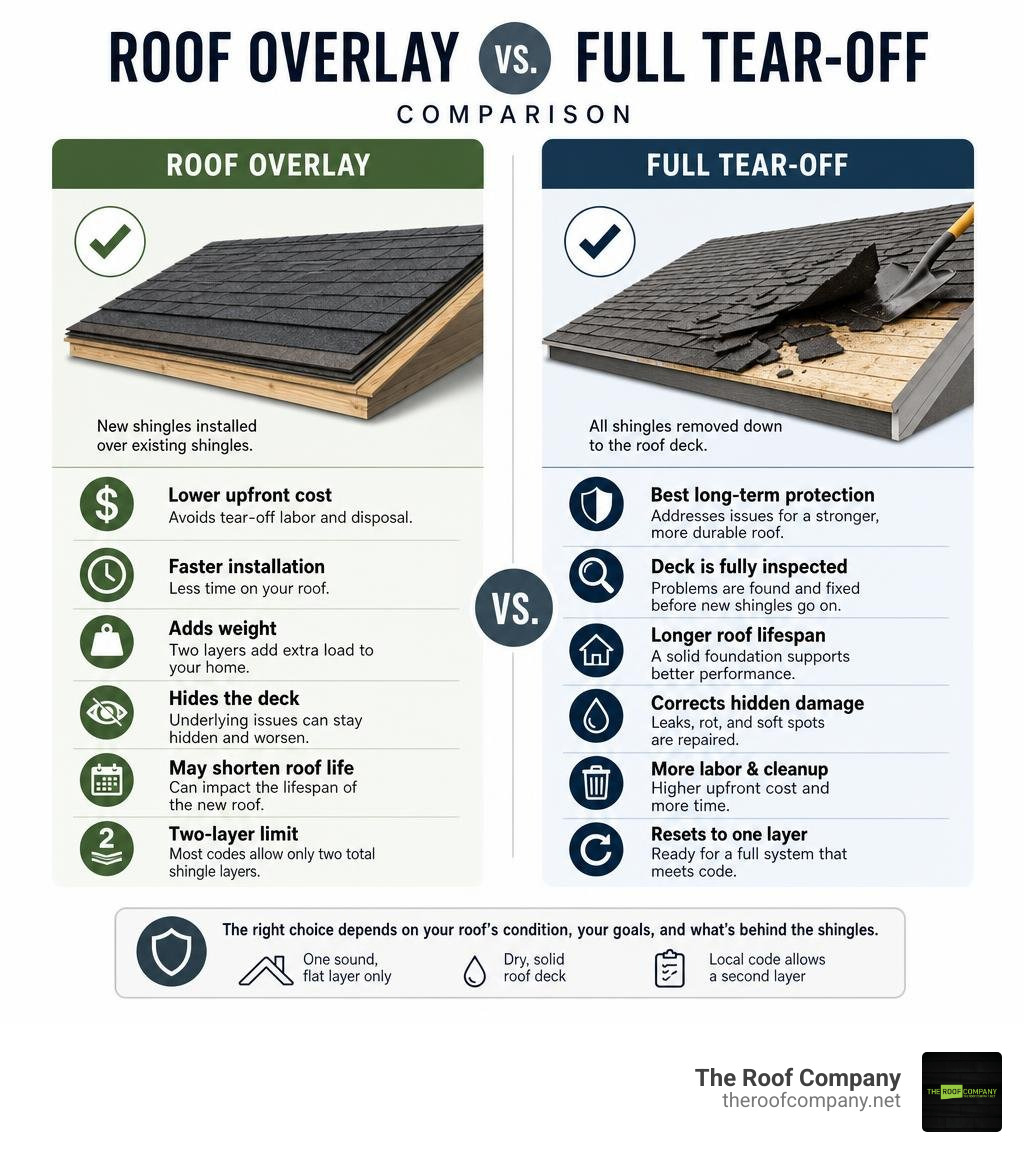
Yes, you can reroof over existing shingles in some cases, but only when there is one sound, flat layer of asphalt shingles, the roof deck is dry and solid, and local code allows a second layer. It can save 40-50% upfront by avoiding tear-off labor and disposal, but it also hides the deck, adds major weight, and may shorten the new roof’s service life.
A full tear-off is usually the safer long-term choice when there are leaks, soft spots, curling shingles, poor flashing, sagging, or signs of rot. Most codes limit asphalt roofs to two total shingle layers, so an overlay means the next replacement will require removing both layers.
The key is not whether an overlay is cheaper today. It is whether your roof is healthy enough that covering it will not bury a problem you will pay more to fix later.
I am Darren, co-owner of The Roof Company, with more than 30 years in roofing across Southeast Michigan. I have helped homeowners assess whether to reroof over existing shingles or remove everything down to the deck, with a focus on clear findings and durable solutions.
What Is Roof Overlaying and How Does It Work?
In the roofing world, an overlay—often referred to as a “recover” or “reroof”—is the process of fastening a brand-new layer of asphalt shingles directly on top of the original layer rather than stripping the system down to the bare wood deck.
When property owners look for ways to cut short-term home improvement expenses, skipping the tear-off process sounds like a dream. By leaving the original layer intact, you skip the labor-intensive job of prying off old shingles, hauling away heavy debris, and paying substantial landfill tipping fees.
However, a recover changes how a roofing assembly functions mechanically:
- Bypassing the Underlayment Stage: In a standard installation, fresh synthetic underlayment and self-adhering ice-and-water shields are applied directly to a clean wooden deck. With an overlay, the existing shingles act as your base, preventing direct-to-deck adhesion for critical leak barriers.
- Flashing Adjustments: Proper perimeter and penetration flashing (such as step flashing along sidewalls or chimney flashing) must either be retrofit, modified, or completely rebuilt over the extra thickness.
- Edge Metal Installation: New aluminum drip edge must be carefully positioned and fastened to ensure water flows cleanly into your gutters without seeping between the old and new layers.
If you are curious about how a ground-up installation differs from an overlay, our in-depth guide to new roof installation covers the end-to-end steps required for bare-deck applications.
Nesting vs. Bridging Installation Methods
When applying new shingles over old ones, roofing crews rely on two primary installation techniques to prevent visual unevenness, structural stress, and moisture infiltration:
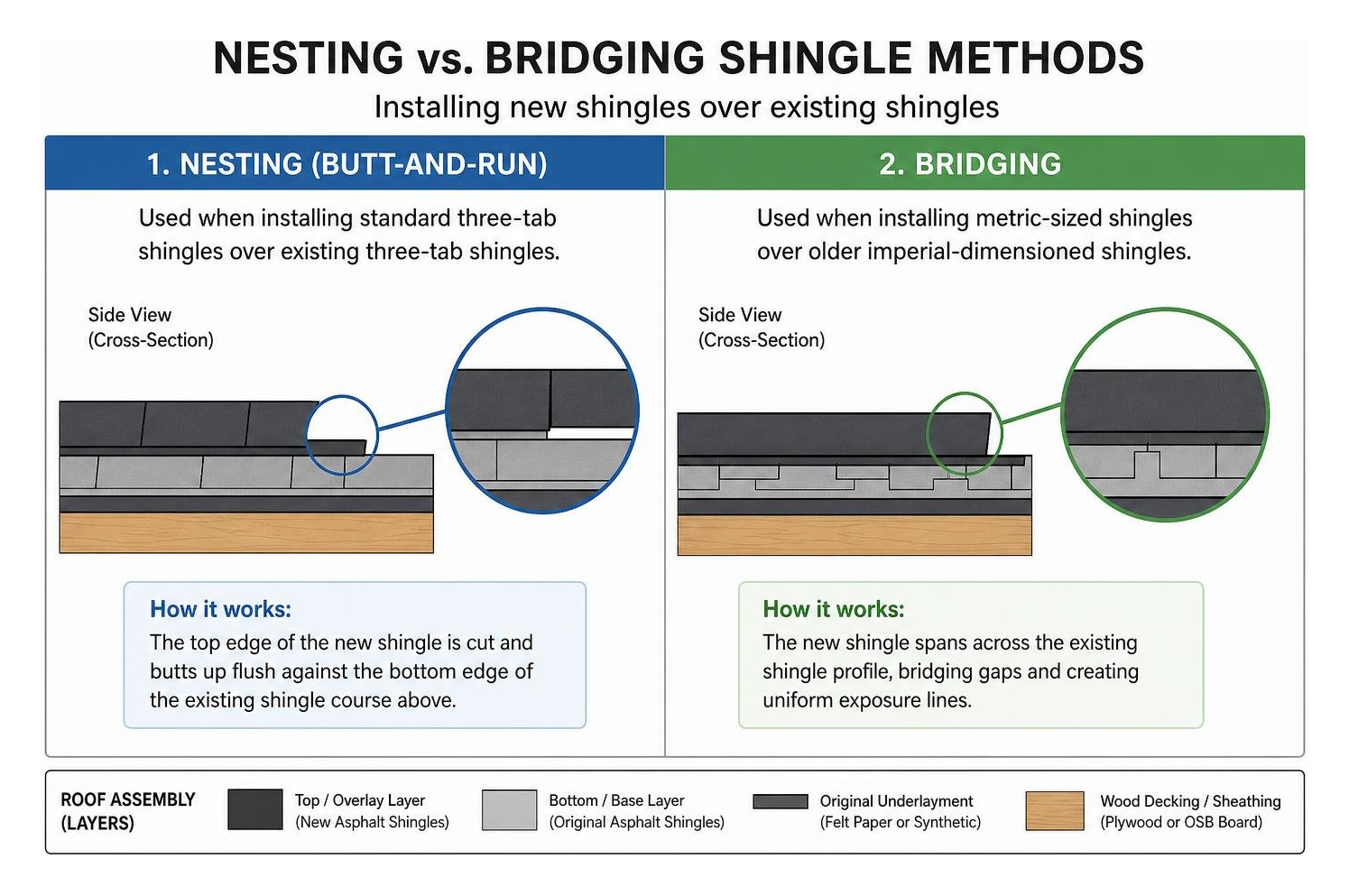
- The Nesting (Butt-and-Run) Method: This method is used when installing standard three-tab shingles over existing three-tab shingles. The installer cuts the top section of the new shingle so its top edge butts up flush against the bottom edge of the existing shingle course above it. “Nesting” creates a flat profile and minimizes telegraphing—an aesthetic defect where the uneven bumps and ridges of the old shingles show through the new roof.
- The Bridging Method: Bridging is commonly used when installing new metric-sized shingles over older imperial-dimensioned shingles. The new course spans across the existing shingle profile, bridging gaps and creating uniform exposure lines.
Both methods demand specialized fasteners. Standard 1-1/4-inch roofing nails are too short for an overlay; contractors must use 2-inch to 2-1/4-inch galvanized roofing nails to ensure the fastener penetrates at least 3/4 inch into the underlying wood sheathing after passing through two full layers of asphalt.
When Can You Legally Reroof Over Existing Shingles?
Before jumping into a recover project, you must ensure local building safety standards allow it. According to the International Residential Code, detailed in Re-Roofing Over Existing Shingles: IRC 2018 R907.3 Code Rules, residential structures are permitted a maximum of two layers of asphalt shingles.
If your home currently has one single layer of shingles that lies flat and the decking beneath is completely sound, adding a second layer is legally permitted in most jurisdictions.
However, municipalities often enforce strict building code compliance before granting a permit:
- Structural Dead-Load Verification: The framing, rafters, and trusses must be rated to support the extra weight.
- Proper Fastener Anchorage: The nails must bite securely into structural wood sheathing, not just sit loosely in the old shingle substrate.
- Perimeter Drip Edge Compliance: Modern building codes require drip edges along eaves and rakes, which must be correctly installed during the recover.
When You Should Never Reroof Over Existing Shingles
An overlay is not a magic fix for an old, failing roof. In fact, applying a recover under the wrong circumstances guarantees premature failure and wasted money.
As detailed in Can You Shingle Over Existing Shingles? Pros, Cons & Code, you should never install an overlay if any of the following conditions exist:
- Curling, Cupping, or Warped Shingles: If the original shingles are curling at the edges or cupped in the center, new shingles cannot lay flat. They will mirror those bumps, crack under foot traffic, and blow off during storms.
- Existing Multi-Layer Roofs: If your roof already has two layers, code strictly mandates a full tear-off. A third layer is illegal due to severe collapse hazards.
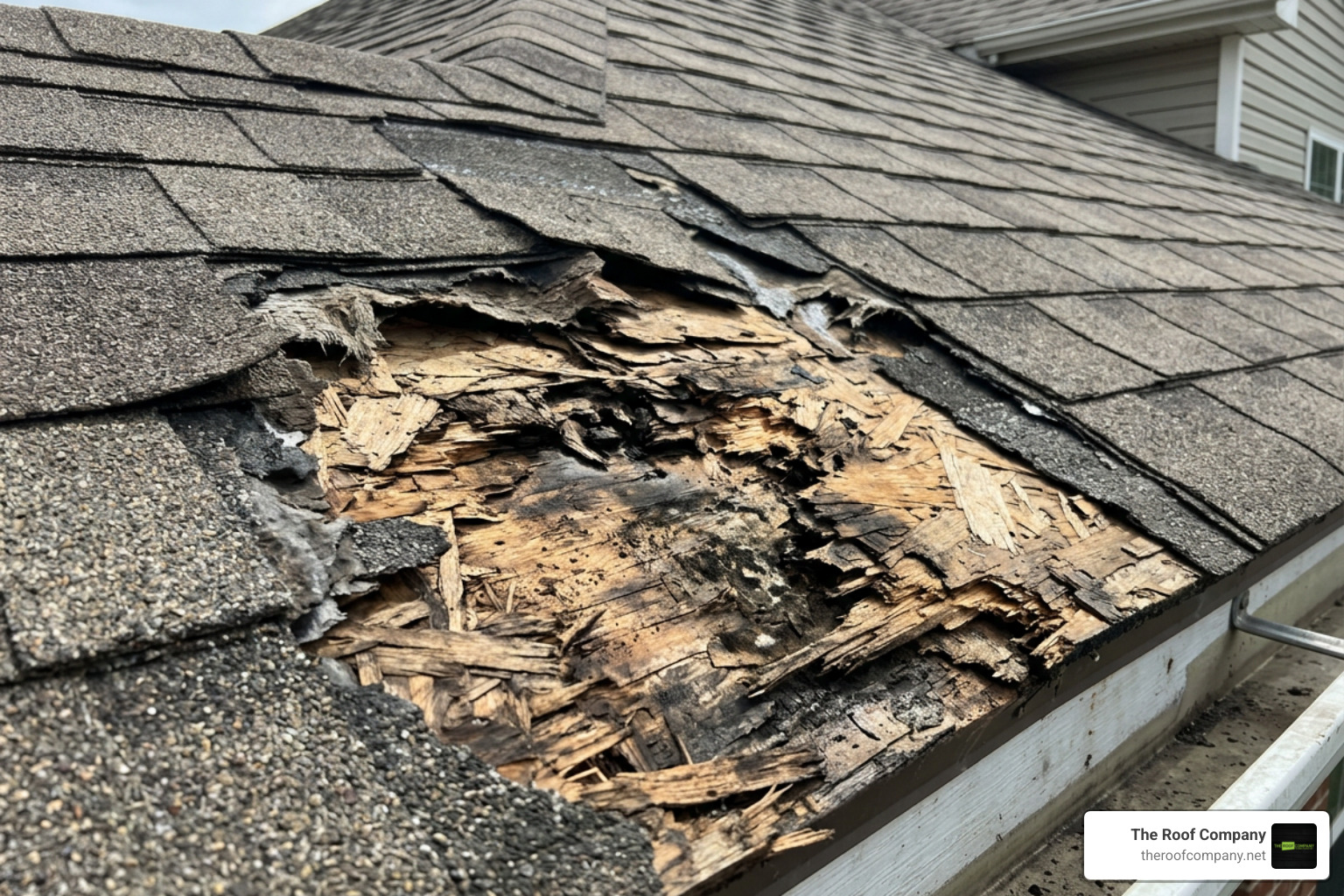
- Underlying Structural Deck Rot or Leaks: If your roof has an active leak, rotted plywood, or spongy framing, an overlay simply buries the moisture. Trapped water will continue to rot the wood structure unseen.
- Existing Architectural or Laminated Shingles: Dimensional shingles have uneven surface elevations. Laying another set of shingles over these textured profiles creates large air pockets, preventing the new shingles from sealing properly.
- Incompatible Materials: Asphalt shingles can only be installed over smooth asphalt shingles. You cannot overlay asphalt across cedar shakes, slate, clay tile, or metal roofing.
Structural Risks and Hidden Pitfalls of a Second Shingle Layer
While an overlay might look acceptable from the street on day one, adding a second layer introduces long-term structural and physical challenges that every property owner should understand.
1. Excessive Dead Load and Winter Snow Stress
Asphalt shingles are heavy. A standard square (100 square feet) of asphalt shingles weighs between 200 and 350 pounds. When you install a second layer, the combined weight of the roofing system increases to 600–700 pounds per square.
For an average 2,000-square-foot roof:
- The overlay adds 6,000 to 7,000 extra pounds of dead load.
- The total weight resting on your home’s rafters climbs to 12,000–14,000 pounds.
In regions that experience heavy winter snowfall, like Southeastern Michigan (including Oakland County, Livingston County, and Wayne County), this extra dead load leaves less safety margin for deep snow drifts and heavy ice accumulation.
2. Trapped Heat and Accelerated Aging
A double-layer roof traps significantly more heat than a single layer. The underlying shingles absorb heat from the summer sun and hold it against the new shingles above.
This thermal stress bakes the top layer from below, accelerating granule loss, drying out volatile asphalt compounds, and reducing the new shingles’ expected lifespan by 20% to 40%.
3. Inability to Install Ice and Water Shields
One of the most important protective components on modern homes in freeze-thaw climates is the self-adhering ice-and-water barrier. These rubberized membranes must stick directly to clean wood sheathing along eaves, valleys, and around chimneys to stop ice dam backups.
During an overlay, you cannot adhere these membranes directly to the deck, leaving your roof vulnerable to winter water infiltration.
For homeowners looking to track and preserve the structural health of their properties over decades, proactive roof asset management helps spot early wear before double-layer moisture trapping leads to structural failure.
Manufacturer Warranty and Resale Value Impacts
Many homeowners assume that buying high-end architectural shingles with a 30-year or lifetime limited warranty guarantees protection no matter how they are installed.
This is a common misconception.
Most major shingle manufacturers explicitly require their products to be installed over an approved, clean, and flat deck substrate with specific underlayment configurations. Installing over existing shingles often:
- Voids non-prorated material defect protection.
- Reduces warranty coverage periods substantially.
- Automatically excludes blow-off and wind warranties because fasteners cannot achieve rated grip strength through two shingle courses.
Furthermore, home inspectors immediately flag double-layer roofs during real estate transactions. Savvy buyers recognize that a two-layer roof represents a deferred liability, and they often demand price concessions or escrow credits to cover an inevitable, expensive double tear-off.
Financial Analysis: Upfront Savings vs. Lifecycle Costs
To decide whether an overlay makes financial sense, you must weigh short-term cash savings against long-term lifecycle value.
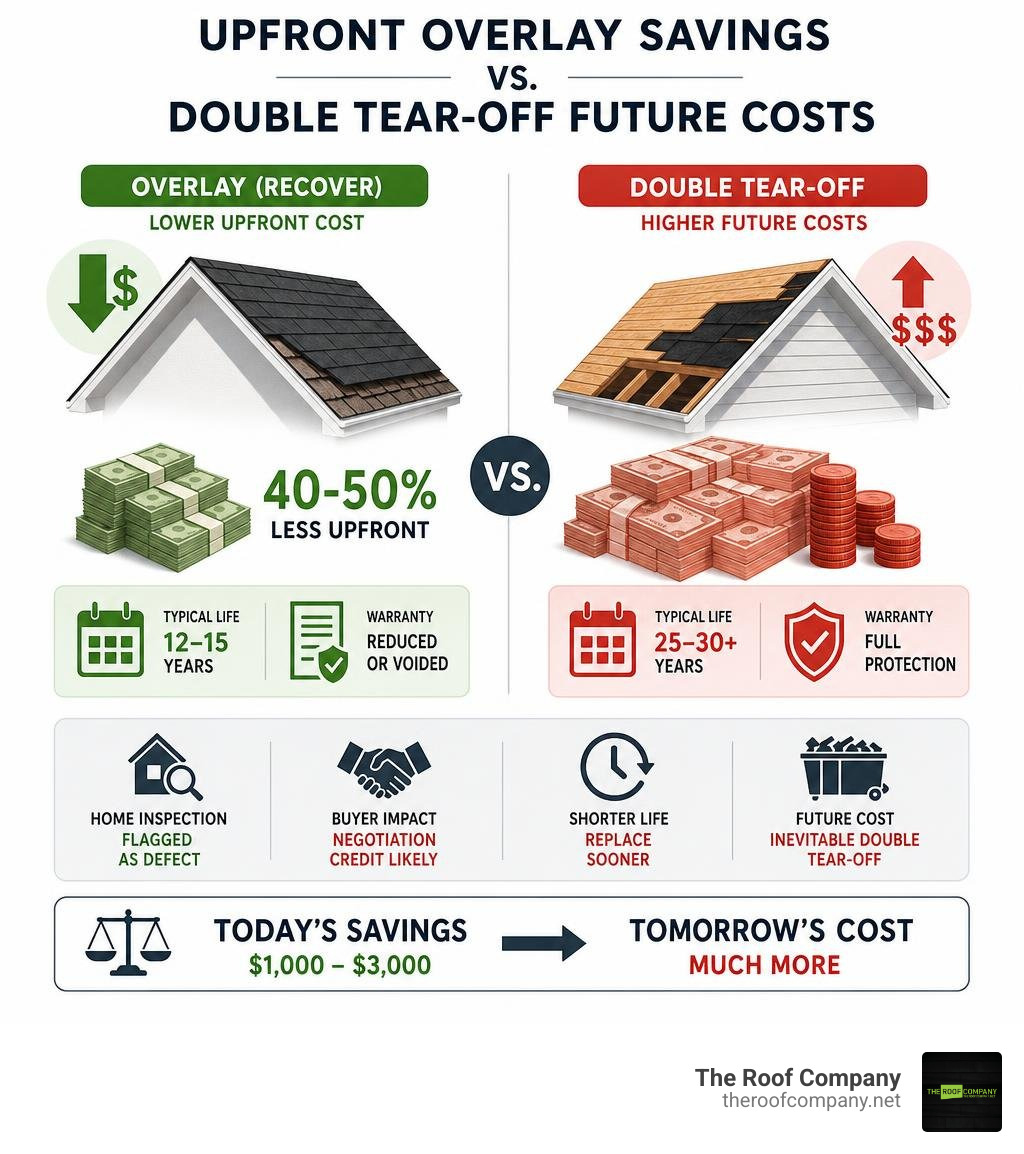
An overlay is roughly 40% to 50% less expensive upfront than a full replacement because it eliminates tear-off labor and debris dumpster fees. On an initial invoice, choosing to reroof over existing shingles can save between $1,000 and $3,000.
However, that upfront saving is often offset by two factors:
- Shortened Service Life: An overlay typically lasts only 12 to 15 years, compared to 25 to 30+ years for a properly installed, fully ventilated tear-off system.
- The Double Tear-Off Penalty: When the overlay finally reaches the end of its life, the next replacement will require tearing off two complete layers of shingles. Laborers must double their physical work, and disposal weight doubles, adding $1,000 to $3,000 in extra tear-off and landfill fees to that future project.
If you are planning your home improvement budget, review our breakdown on what should I expect to pay for a roof replacement? for detailed project price factors.
Cost Comparison: Tear-Off vs. Reroof Over Existing Shingles
Roofing costs vary based on pitch, square footage, materials, and regional disposal fees. In Michigan communities across Oakland, Macomb, Washtenaw, and Livingston counties, labor and dump rates play a major role in total estimates:
- 1,000 sq. ft. roof: Overlay: $2,500 – $3,500 | Full Replacement: $4,000 – $5,500
- 2,000 sq. ft. roof: Overlay: $5,000 – $7,000 | Full Replacement: $8,000 – $11,000
- 3,000 sq. ft. roof: Overlay: $7,500 – $10,500 | Full Replacement: $12,000 – $16,500
(Note: Material calculations generally include a 10% to 15% waste factor. For example, a 2,000 sq. ft. roof requires roughly 22 to 23 squares of materials).
For a deeper dive into regional pricing throughout Southeastern Michigan, check out our guide to roofing cost Michigan.
Frequently Asked Questions About Roof Overlays
How long does a second layer of shingles typically last?
A second layer of shingles typically lasts 12 to 15 years, provided the original base layer is completely flat, clean, and structurally sound.
Because the second layer sits on top of an existing asphalt surface rather than a ventilated deck, it traps ambient attic heat and solar radiation. This extra heat breaks down the asphalt binders faster than normal, shortening product life by 20% to 40% compared to a complete tear-off installation.
Does adding a second layer of shingles void the manufacturer warranty?
In many cases, yes—or it severely reduces the warranty coverage.
Most major shingle manufacturers design their product warranties around strict installation guidelines, which require fastening shingles directly over approved, flat decking lined with specific underlayment membranes.
Installing new shingles over an old layer can void non-prorated defect coverage, nullify wind resistance ratings, and complicate claims if issues arise down the line.
How much extra weight does an overlay add to a roof?
A second layer of asphalt shingles adds roughly 2 to 3.5 pounds per square foot of dead load to your home’s structure.
For an average 2,000-square-foot roof, an overlay adds between 6,000 and 7,000 pounds of new material, bringing the combined shingle weight on your roof trusses and rafters to 12,000 to 14,000 pounds. In snowy climates, this extra weight places added strain on roof framing during severe winter storms.
Conclusion
Choosing whether to reroof over existing shingles or invest in a full tear-off comes down to your long-term plans, your budget, and the current health of your roof deck.
While an overlay offers an immediate 40% to 50% upfront saving, it carries clear trade-offs:
- It conceals underlying wood rot and moisture issues.
- It adds thousands of pounds of dead load to your home framing.
- It bakes shingles from below, shortening their lifespan.
- It pushes an expensive double tear-off onto your future self.
If you are planning to stay in your home long term, starting fresh with a clean, inspected deck and modern ice-and-water protection is almost always the smarter investment.
When you are ready to evaluate your home’s roof, read the ultimate guide to hiring a reliable roofing company to ensure you choose an experienced, transparent team.
At The Roof Company, we provide homeowners across Novi, South Lyon, and throughout Oakland, Livingston, Washtenaw, Macomb, and Wayne counties with honest evaluations, clear communication, and lifetime guarantees. Contact us today to explore our professional roof replacement services and get a detailed inspection of your roof.


