


Spotting Storm Impacts: Hail Damage vs. Wear and Tear
When severe weather strikes Southeastern Michigan—from Novi and South Lyon to Oakland and Wayne counties—it is common to worry about the integrity of your home. According to the National Severe Storms Laboratory, hail can fall at significant speeds and inflict severe impact damage on residential structures. However, telling the difference between natural weathering and actual storm damage takes a trained eye.
Common Signs of Hail Damage on Shingles
True hail damage alters the physical structure of your roofing material. When hailstones strike asphalt shingles, they leave specific indicators:
- Mat Fractures and Soft Bruises: Similar to how an apple bruises, a hail impact creates a soft spot on the shingle. If you press your thumb into the crater, you will feel a loss of structural support underneath where the fiberglass or organic mat has fractured.
- Random Impact Patterns: Hail strikes are completely random. You will see indentation marks spread across all slopes of the roof, rather than uniform lines or repeating marks.
- Exposed Asphalt Mat: When high-velocity ice knocks away ceramic granules, it exposes the dark asphalt layer underneath. Over time, UV exposure degrades this exposed asphalt, accelerating deterioration.
- Soft Metal Dents: Always check ground-level soft metals first. Dented gutters, downspouts, metal ridge vents, and AC unit condenser fins are excellent clear visual indicators that substantial hail hit your property.
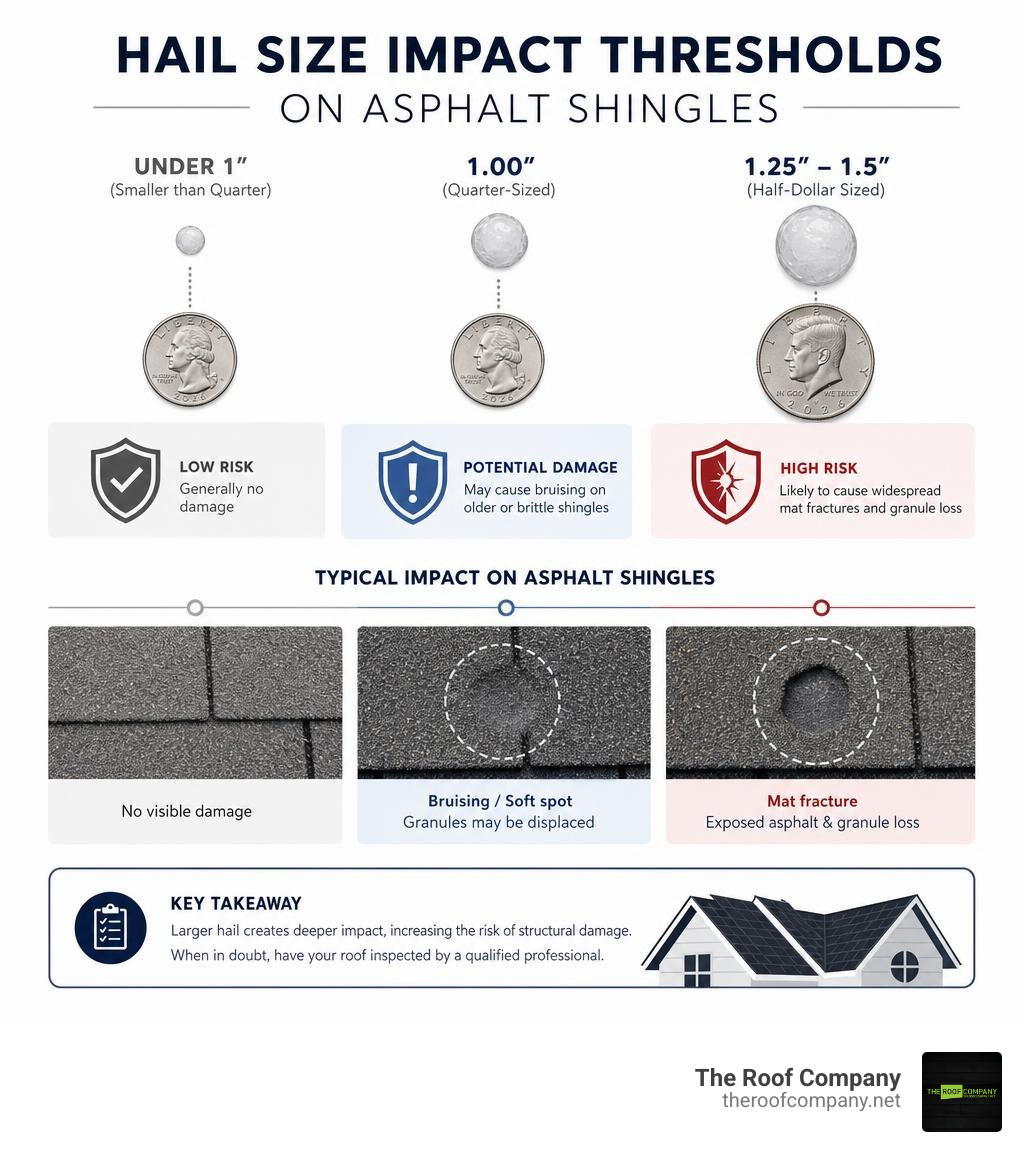
Generally, hail must be 1 inch (quarter-sized) to damage lightweight composite shingles. Standard laminated architectural shingles typically require hailstones around 1.25 to 1.5 inches (half-dollar sized) to cause widespread mat fracturing, unless the shingles are already aged and brittle.
Differentiating Hail Impact From Aging and Blistering
Not every dark spot on a shingle is caused by a storm. Distinguishing hail impact from routine wear prevents unnecessary insurance filings:
- Blistering: Trapped moisture or expanding gas during the manufacturing process can cause blisters that pop over time. Blisters expose the asphalt beneath, but unlike hail bruises, the surrounding shingle mat remains firm and unbruised.
- Thermal Cracks and Craze Cracking: As shingles expand and contract during climate shifts, hair-like surface cracks emerge. These show up in linear patterns, contrasting with random hail strikes.
- Granule Loss From Age: Older roofs naturally shed granules into gutters over time. Unless accompanied by physical mat fractures, granule loss alone is usually a sign of normal aging, not storm impact.
If you suspect your roof needs maintenance due to standard wear or isolated storm hits, reviewing How to Find Local Roof Repair in 5 Easy Steps will help you take the right first actions.
Deciding Whether You Need a New Roof After Hail Damage
Receiving hail on your property does not automatically mean you need a full tear-off and replacement.
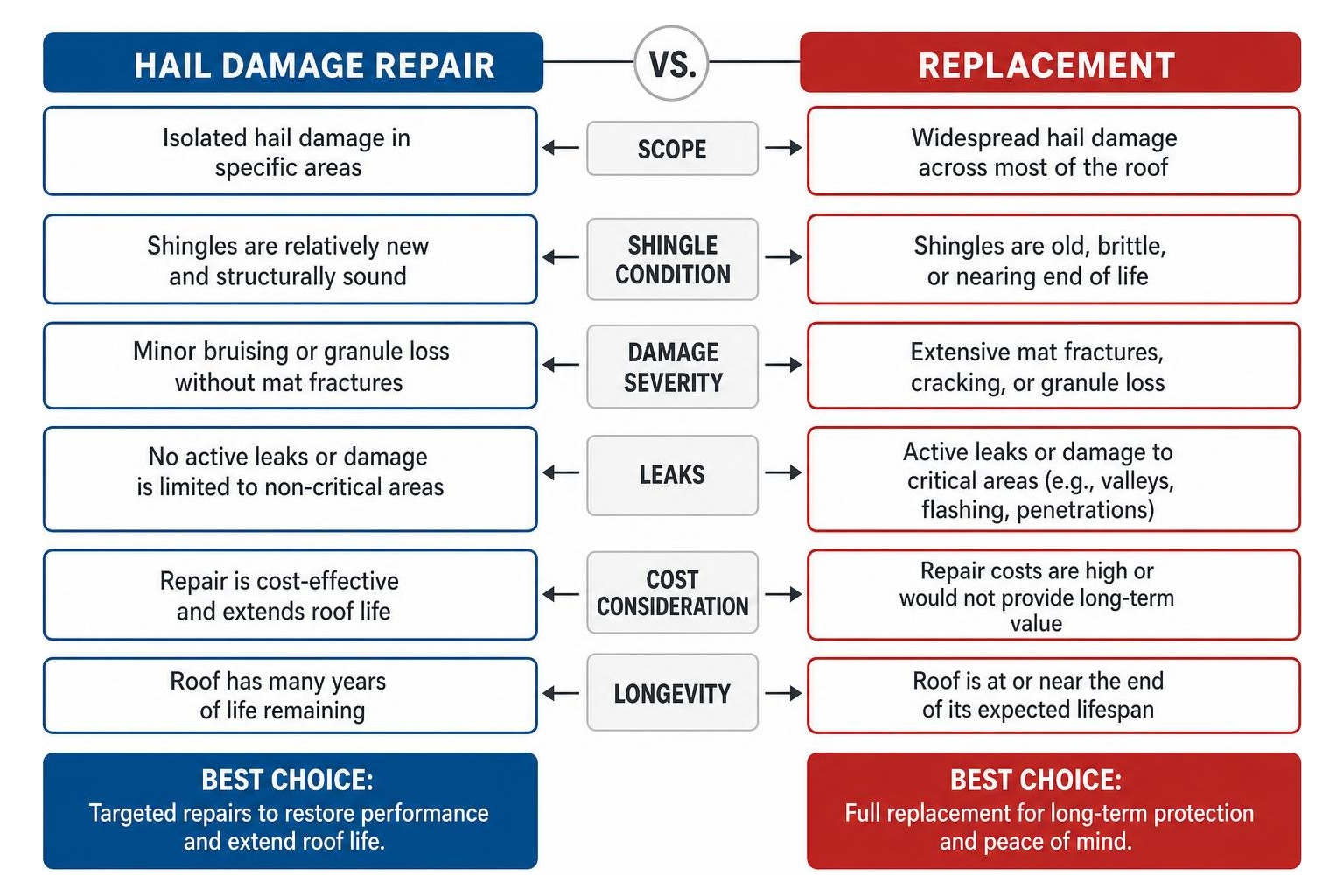
Is a New Roof After Hail Damage Always Necessary?
In fact, many roofs replaced after storms could actually be saved with targeted maintenance. Most roof leaks occur at interruptions like flashing, chimneys, valleys, or plumbing boots due to installation errors or neglect—not because a single hailstone hit a shingle.
A full replacement is generally warranted when:
- Shingle mats are pulverized, fractured, or split across multiple roof slopes.
- The roof is past 12–15 years of age and has lost its natural pliability, making spot repairs impossible without tearing surrounding brittle shingles.
- Over 30–40% of the overall surface area exhibits functional damage that compromises its ability to shed water.
If damage is limited to a few cracked shingles on a pliable 5-year-old roof, isolated repairs are typically the most efficient, cost-effective fix.
| Factor | Spot Roof Repair | Full Roof Replacement |
|---|---|---|
| Damage Extent | Isolated, few damaged shingles | Widespread bruising (>30% surface) |
| Roof Age | Under 10–12 years (Pliable) | 12+ years (Brittle/Deteriorated) |
| Structural Mat | Intact, minor granule displacement | Fractured fiberglass/organic mat |
| Leak Risk | Low, confined to specific flashings | High, multiple penetrations exposed |
| Insurance Claim | Often lower than policy deductible | Warranted; exceeds deductible |
Estimating the Cost of a New Roof After Hail Damage
If widespread damage necessitates a full replacement, costs depend on roof size, pitch, accessibility, and material choice. In 2026, a full standard asphalt shingle roof replacement on a typical single-family home generally ranges from $7,500 to $15,000, with most mid-sized homes falling between $9,500 and $12,500.
When navigating a storm claim, your out-of-pocket expense depends directly on your insurance policy details. Many wind and hail policies utilize percentage-based deductibles (often 1–2% of total dwelling coverage) rather than a flat dollar amount. For example, if your dwelling coverage is $300,000, a 2% deductible means you pay $6,000 out of pocket toward the total replacement cost.
To understand basic installation variables and pricing dynamics in detail, refer to What Should I Expect to Pay for a Roof Replacement.
Navigating Homeowners Insurance Claims and Adjuster Denials
Filing an insurance claim for a new roof after hail damage requires thorough organization and realistic expectations.
Step-by-Step Claims Process and Essential Documentation
- Document Ground-Level Evidence: Take clear photos of dented downspouts, mailboxes, aluminum siding, or outdoor furniture immediately following the storm. Collect loose granules gathered at downspout outlets.
- Note the Exact Date of Loss: Insurance claims require an accurate date of loss to verify meteorological storm data in your area.
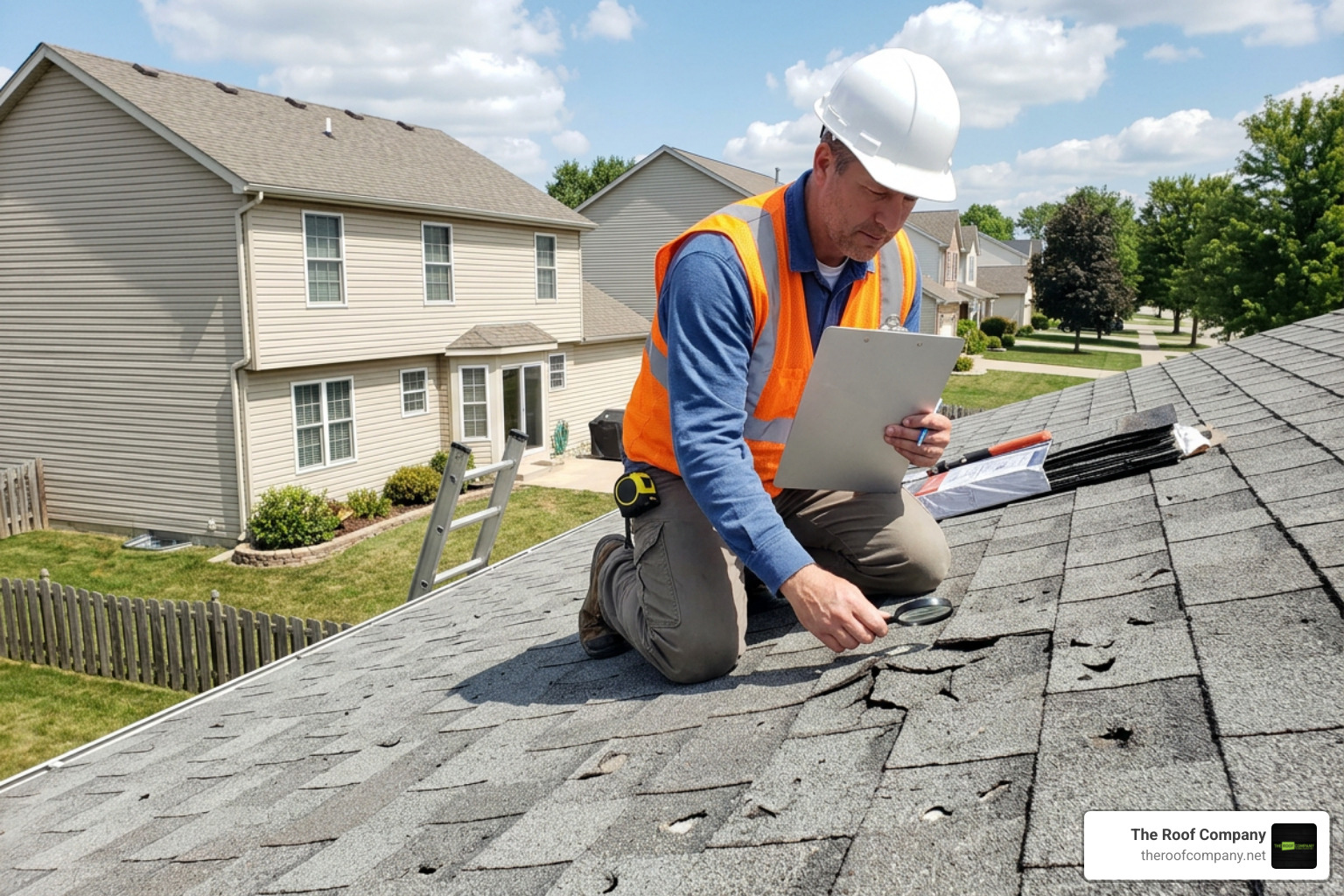
- Schedule an Independent Professional Inspection: Have a local roofer perform a full photo-and-video inspection before calling your insurer. Detailed high-resolution imagery ensures no subtle mat bruising is missed.
- File the Claim: Present your contractor’s documentation package to your insurance carrier to initiate the claim.
To understand the full physical installation scope that occurs after your claim is approved, check out our In-Depth Guide to New Roof Installation.
What to Do If Your Adjuster Denies or Underestimates Your Claim
Adjusters assess dozens of roofs a week and can miss subtle damage due to timing or light conditions. If your claim is denied or partially approved for minor spot repairs when a full replacement is needed:
- Request a Re-Inspection: You have the right to request a second inspection with a different adjuster.
- Have Your Contractor On-Site: Ensure your local roofing contractor attends the re-inspection to physically point out soft mat fractures, soft-metal damage, and structural issues to the adjuster.
- Submit Scope Supplements: Professional roofers regularly submit itemized scope supplements to insurers to account for missed line items, mandatory local building codes, permit fees, and ice-and-water shield protection along eaves and valleys.
Choosing a Reputable Local Contractor vs. Storm Chasers
Following major storms, out-of-state “storm chasers” often flood local neighborhoods, knocking on doors and promising “free roofs.”
Risks of Hiring Out-of-State Storm Chasers
While storm chasers excel at getting initial claims processed, using them brings severe long-term risks:
- Substandard Workmanship: They often hire sub-contractors under tight deadlines, leading to improper flashing installation, improper nail placement, and compromised ventilation.
- Warranty Vanishing Act: Once the storm work dries up, out-of-state operators leave town. If your roof leaks two years later, their “craftsmanship warranty” is essentially useless.
- Siding and Flashing Damage: Improper tear-offs frequently damage step flashing along siding or chimneys. Unscrupulous crews often cover this with caulk or sealant instead of replacing the metal properly, leading to structural leaks later.
How to Find and Vet a Trustworthy Local Roofer
To ensure your investment is protected for decades, always partner with an established local company:
- Check for physical locations, state licensing, and comprehensive insurance coverage in Southeastern Michigan (including Oakland, Livingston, Washtenaw, Macomb, or Wayne counties).
- Verify manufacturer certifications (such as GAF or CertainTeed credentials), which enable extended material and workmanship warranties.
- Demand itemized estimates detailing tear-off, synthetic underlayment, ice-and-water shield placement, flashing replacement, and job site magnetic cleanup.
For a complete checklist on evaluating contractors, explore The Ultimate Guide to Hiring a Reliable Roofing Company.
Frequently Asked Questions About Hail Damage Roof Replacements
Will my insurance rates go up or will I be dropped if I file a hail claim?
Hail damage is classified as an “Act of God” or weather-related event beyond your control. Generally, insurance companies cannot single you out for a rate increase or drop your coverage solely for filing a single storm claim. However, insurers may adjust regional premiums across an entire zip code or county following widespread storm events.
How does the age and condition of my roof affect my insurance claim?
If you carry Replacement Cost Value (RCV) coverage, your policy pays the full cost to install a new roof of similar quality (minus your deductible) once work is completed. If you have an Actual Cash Value (ACV) policy, the insurer depreciates the payout based on the age and condition of your roof. Older, brittle shingles past 12 years of age show hail damage much faster because they lack flexibility, but ACV policies will result in higher out-of-pocket expenses.
How long do I have to file a roof replacement claim after a storm?
Policy windows vary, but many insurance carriers allow 1 year from the date of loss to file a claim, while some states or policies extend up to 2 years. However, delaying an inspection makes it much harder to prove that shingle damage was caused by a specific hail event rather than normal aging. Prompt inspection is always best practice.
Conclusion
Getting a new roof after hail damage does not have to be a stressful or chaotic process. By understanding what true hail impact looks like, carefully weighing repair versus replacement options, and navigating the insurance process with complete documentation, you can keep your home safe and protected without unnecessary expenses.
Avoid high-pressure door-knockers and storm chasers. Always work with a verified, local contractor who understands local building codes, provides clear estimates, and stands behind their craftsmanship with long-term guarantees.
If your home in Southeastern Michigan recently experienced a storm, our experienced team at The Roof Company is here to help. Schedule a professional inspection for your roof replacement today to receive an honest, expert assessment of your roof’s condition.


