


Evaluating the True Cost of a Home Roof Replacement
Understanding the financial investment required for a new roofing system prevents sticker shock. On a national level, a full roof replacement costs between $6,000 and $30,000 for an average single-family home. Most homeowners spend an average of $9,500 to $11,000 to install high-performance architectural asphalt shingles on a standard 2,000-square-foot roof. Across different materials, overall installed prices range from $6.30 to $12.30 per square foot.
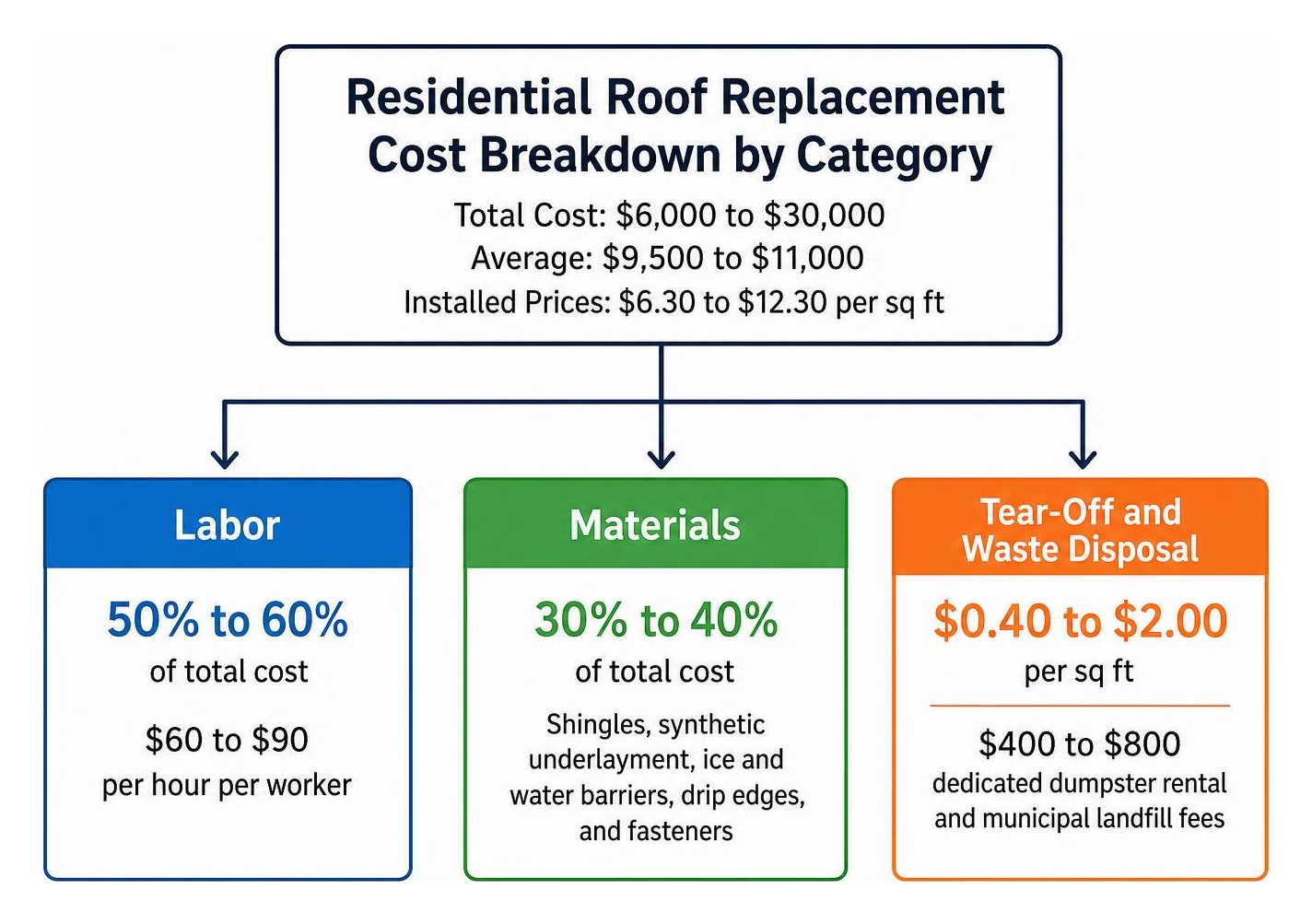
When asking yourself what should I expect to pay for a roof replacement?, look closely at the cost breakdown:
- Labor: Skilled labor accounts for roughly 50% to 60% of your total invoice. Professional roofing contractors typically bill between $60 and $90 per hour per worker to account for specialized equipment, steep-slope safety rigging, and liability insurance.
- Materials: Shingles, synthetic underlayment, ice and water barriers, drip edges, and fasteners represent 30% to 40% of the total expense.
- Tear-Off and Waste Disposal: Stripping away the existing failed system costs between $0.40 and $2.00 per square foot, plus $400 to $800 in dedicated dumpster rental and municipal landfill fees.
According to the 2026 roof replacement cost study, geographic location and local labor dynamics significantly shift project totals. For a typical 1,700-square-foot asphalt shingle project, total turnkey pricing generally settles between $6,000 and $9,000, or roughly $3.50 to $6.00 per square foot installed for straightforward layouts.
Material Longevity and Annual Lifecycle Costs
The cheapest shingle off the shelf is rarely the most affordable roofing system over decades of homeownership. Evaluating materials by their “cost per year of service” paints a much more accurate picture of long-term value.
| Roofing Material | Typical Lifespan | Installed Cost per Sq. Ft. | Average Annual Lifecycle Cost |
|---|---|---|---|
| 3-Tab Asphalt Shingles | 15 – 20 Years | $3.50 – $5.00 | $470 – $570 / year |
| Architectural Shingles | 25 – 30 Years | $4.50 – $7.00 | $370 – $500 / year |
| Standing Seam Metal | 40 – 70 Years | $9.00 – $16.00 | $340 – $550 / year |
| Clay & Concrete Tile | 50 – 100 Years | $10.00 – $20.00 | $250 – $400 / year |
| Natural Slate | 100 – 150+ Years | $20.00 – $35.00 | $280 – $680 / year |
Architectural asphalt shingles and standing seam metal systems deliver the most practical balance of upfront affordability, resilience against high winds, and low annual lifecycle expense.
Estimating Your Home Roof Replacement by Square Footage and Pitch
Roofers calculate pricing based on “squares,” where one roofing square equals 100 square feet of roof surface. Your roof’s surface area is 1.2 to 1.8 times larger than your home’s ground-floor footprint due to overhangs, architectural eaves, and roof slope.
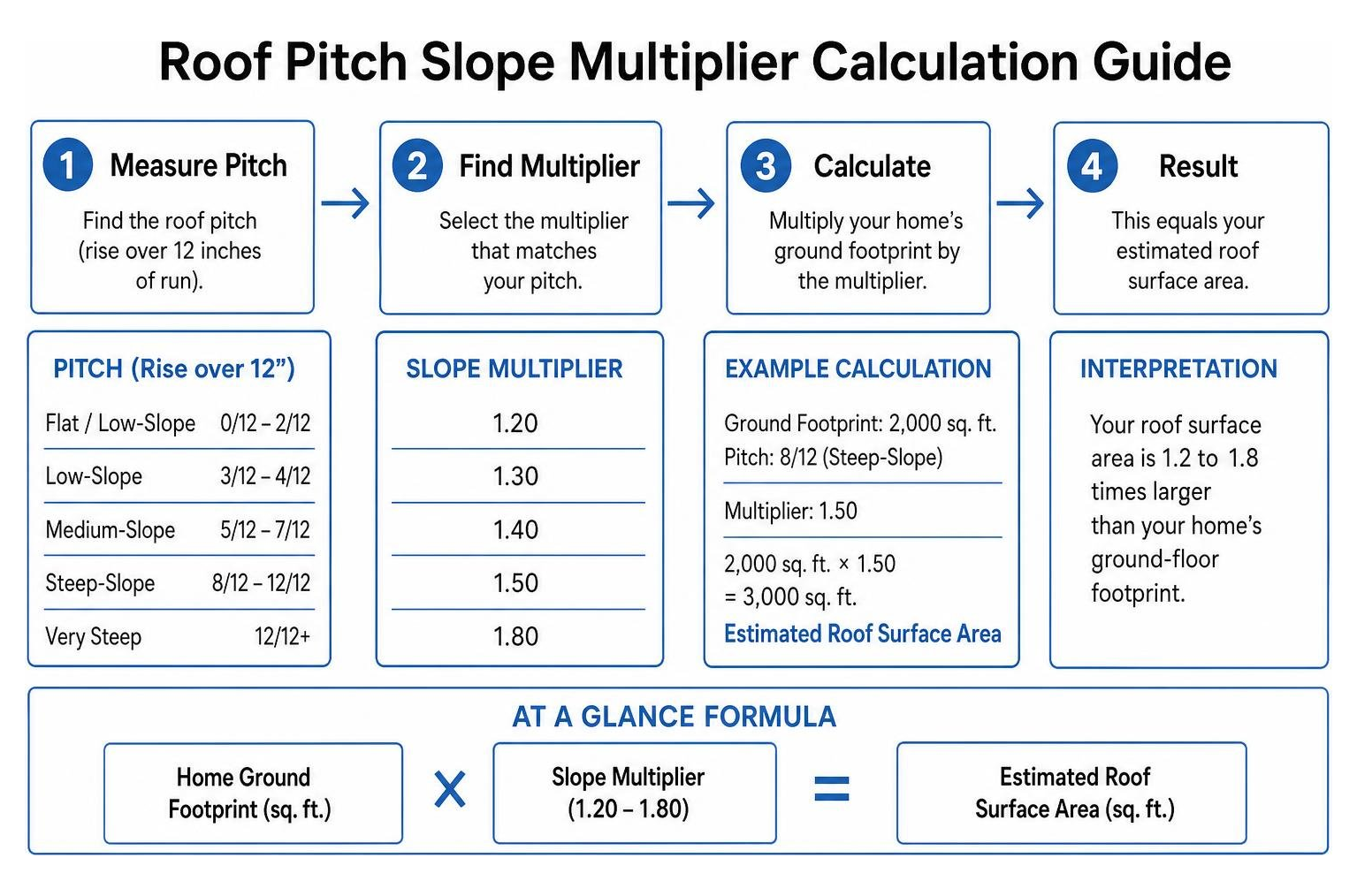
When calculating roofing cost Michigan homeowners encounter specific architectural variables:
- Pitch Multipliers: A flat or low-slope roof allows crews to walk freely. A steep roof (such as an 8/12 or 12/12 pitch) requires staging scaffolding, safety harnesses, and specialized roof jacks. This added complexity increases labor costs by $1,000 to $3,000.
- Architectural Complexity: Every dormer, valley, parapet wall, and chimney requires custom hand-cut flashing, raising labor hours and waste factor allowances from a standard 10% up to 15% or 20%.
- Accessibility: Two-story or three-story homes require extra labor time to safely hoist materials up and carry old debris down.
Warning Signs: When to Replace vs. Repair Your Roof
Minor roof leaks caught early can often be resolved with targeted repairs. However, continuous patching on an aging system wastes money. A practical benchmark is the 30-percent rule: if the estimated cost of needed repairs exceeds 30% of a full replacement price, replacing the entire system is the more financially sound decision.
Watch for these primary exterior failure signs:
- Heavy Granule Loss: While minor granule shedding happens during the first year after installation, heavy accumulation in your gutters—often resembling coarse black sand—exposes the underlying asphalt mat to UV radiation and rapid cracking.
- Curling, Buckling, or Missing Shingles: Shingles that curl at the edges or cup in the middle have lost their adhesive bonding and will blow off in heavy windstorms.
- Age Milestones: Standard asphalt systems over 20 years old are at the end of their design lifespan.
Knowing beat the rush: when is the best time to replace a roof? helps you schedule installations during stable spring and fall temperatures, avoiding emergency leaks during severe winter freezes.
Structural Indicators and Attic Warning Signs
The underside of your roof deck in the attic often reveals problems before water drips through your finished ceilings.
Take a flashlight into your attic on a bright day to check for:
- Daylight Through Decking: Visible pinpricks of sunlight (outside of intentional soffit and ridge vents) point to separated roof sheathing or rotted planks.
- Sagging Rafters and Decking: Any noticeable dip or curve along the ridge line or between rafters indicates structural wood rot from long-term, trapped moisture.
- Dark Stains and Active Mold: Dark water trails down the plywood or white/black mold blooms on rafters show that poor attic ventilation is trapping interior condensation.
- Compromised Insulation: Damp, compacted attic insulation loses its R-value, driving up heating bills and accelerating winter ice damming.
Full Tear-Off vs. Overlay Risks
Homeowners looking to reduce upfront costs sometimes consider installing a second layer of shingles directly over the existing roof. While some municipal building codes allow up to two layers, we strongly advise against overlays for several critical reasons:
- Concealed Wood Rot: An overlay covers up the old underlayment, making it impossible to inspect the structural plywood deck for rot, soft spots, or delamination.
- Heat Trapping and Premature Aging: Double-layered shingles trap heat inside the roofing assembly, baking the top shingles and shortening their service lifespan by 10% to 20%.
- Excess Weight: Shingles are heavy. Adding a second layer puts thousands of pounds of dead load onto your roof trusses.
- Doubled Future Disposal Costs: When the roof eventually fails, the next tear-off requires stripping two full layers, doubling your labor and disposal expenses.
- Warranty Limitations: Most major shingle manufacturers restrict or void their non-prorated limited lifetime warranties when materials are applied over existing shingles.
What Every Comprehensive Roofing Estimate Must Include
A complete roofing estimate should leave no ambiguity. When reviewing contractor quotes, look past the bottom-line total and compare the detailed line items.
Our guide on the ultimate guide to hiring a reliable roofing company details how transparent contractors itemize project specifications rather than providing a single vague lump sum.
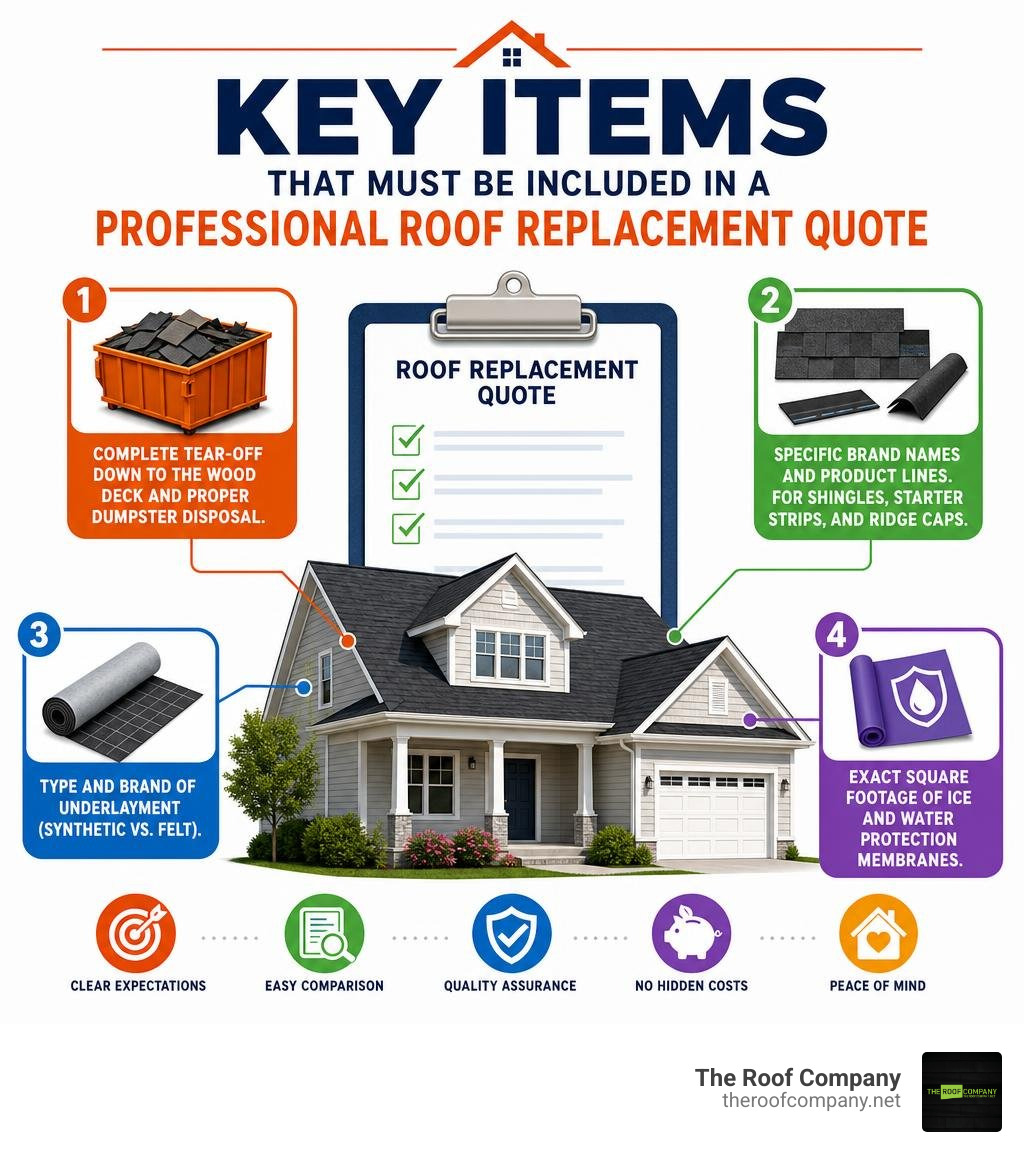
Make sure every estimate includes:
- Complete tear-off down to the wood deck and proper dumpster disposal.
- Specific brand names and product lines for shingles, starter strips, and ridge caps.
- Type and brand of underlayment (synthetic vs. felt).
- Exact square footage of ice and water protection membranes.
- Replacement of all flashing, drip edge metal, and vent pipe boots.
- A clear per-sheet price for replacement plywood or OSB decking.
- Local municipal building permits and post-job magnetic nail cleanup.
- Written manufacturer material warranties and contractor workmanship guarantees.
Essential Decking, Underlayment, and Flashing Components
A reliable roof relies on a layered weatherproofing system working beneath the shingles.
Reviewing an in-depth guide to new roof installation highlights the importance of these critical sub-layers:
- Plywood/OSB Decking: The structural foundation. Any soft, rotted, or water-damaged sheathing must be cut out and replaced with fresh 7/16-inch or 1/2-inch exterior-grade panels (typically costing $75 to $100 per 4×8 sheet installed, or $2.20 to $3.00 per square foot).
- Synthetic Underlayment: Replacing old 15-pound felt, modern synthetic underlayment offers water resistance and tear strength across the entire field of the deck ($1.50 to $2.10 per square foot).
- Ice and Water Shield: A self-adhering modified bitumen membrane installed along eaves, valleys, rakes, and around chimneys to stop water backups caused by winter ice dams ($1.87 to $2.53 per square foot).
- Drip Edge & Flashing: Corrosion-resistant galvanized steel or aluminum drip edges protect fascia boards, while step flashing and counter flashing channel water away from masonry chimneys and vertical sidewalls.
- Pipe Boots: Heavy-duty rubber or lead boots seal plumbing vent stacks against water intrusion ($63 to $85 per boot).
Attic Ventilation and Gutter Integration
A new roof needs balanced airflow to perform properly. Without adequate ventilation, summer heat can reach 150°F in your attic, baking your shingles, while winter moisture creates frost that rots structural framing.
A balanced ventilation system includes:
- Intake Vents: Continuous perforated soffit vents or undereave baffles that draw cool, dry air into the lower attic space.
- Exhaust Vents: High-profile continuous ridge vents along the roof peak that allow hot, moist air to escape naturally via convection.
Pairing your roof replacement with an inspection of your seamless gutters ensures roof runoff drains away from your foundation. Replacing old, dented gutters ($5 to $14 per linear foot) alongside rotted fascia boards ($4.25 to $8.62 per linear foot) ensures rainwater flows away from your home without backing up under your new shingles.
Insurance Claims, Financing Strategies, and Special Upgrades
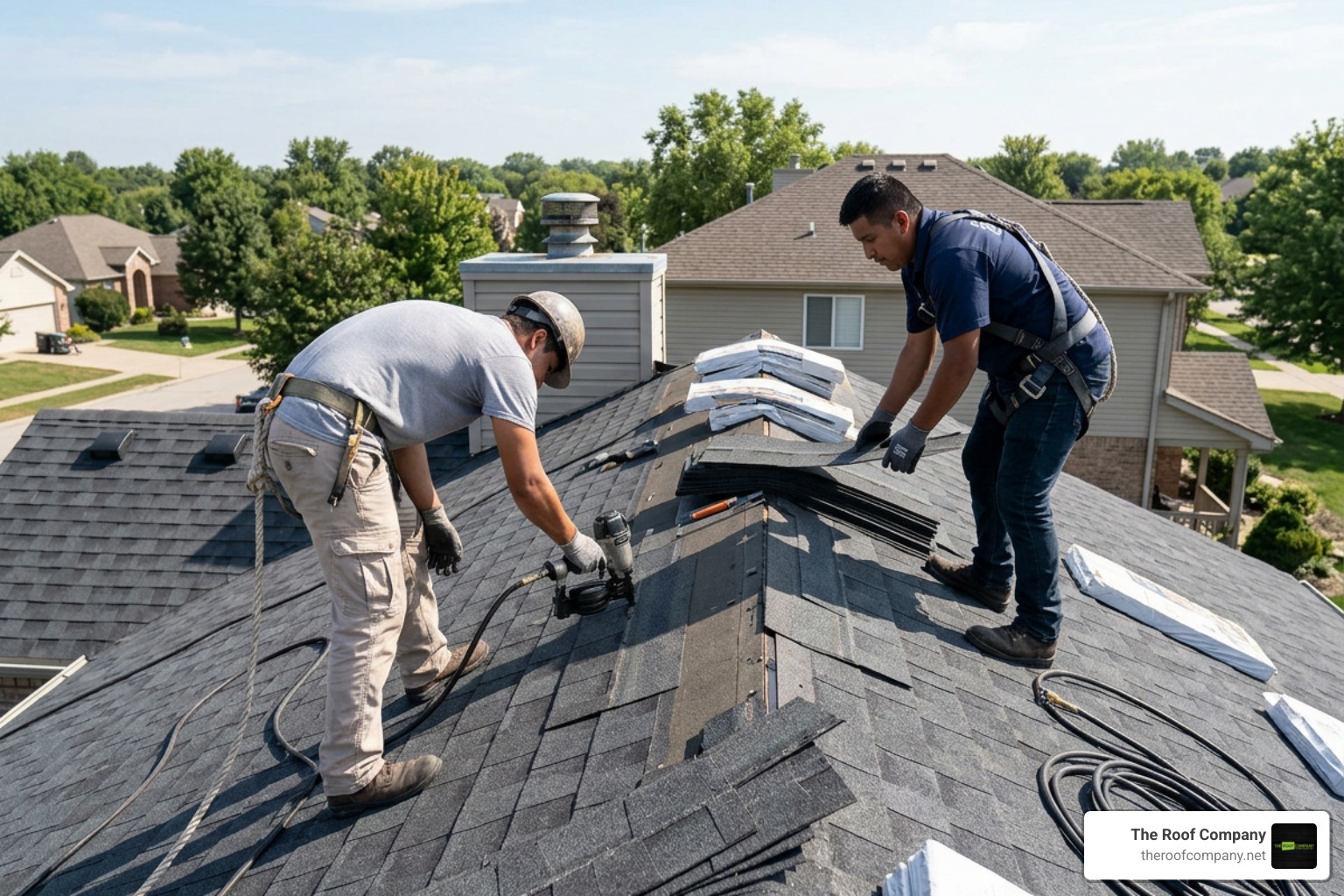
Roof replacements required due to sudden storm, hail, or falling tree damage are often covered by homeowners insurance. Standard wear, aging, and deferred maintenance, however, are not covered.
If severe weather impacts your home:
- Document the exterior damage with date-stamped photos and video immediately after the storm clears.
- Contact a local roofing contractor to inspect the roof and create a detailed scope of damage before you call your adjuster.
- Review our advice in no cash up high: how to finance a new roof safely so you understand out-of-pocket costs, deductibles, and deductible laws.
Navigating RCV vs. ACV Insurance Policies and Premium Discounts
Understanding your insurance policy terms prevents surprises during the claims process:
- Replacement Cost Value (RCV): Covers the full current cost to replace your roof with new materials of like kind and quality, minus your deductible. The insurer pays the initial depreciated value and releases the remaining “recoverable depreciation” once the contractor submits the final invoice showing work is complete.
- Actual Cash Value (ACV): Pays only the depreciated value of your roof based on its age and condition at the time of loss. On a 15-year-old roof with a 25-year lifespan, an ACV policy may only cover 40% of the total replacement cost, leaving you to pay the remaining balance out of pocket. Many insurers automatically convert roof coverage from RCV to ACV once a roof turns 15 to 20 years old.
Installing impact-resistant roofing can also reduce your ongoing insurance expenses. Choosing UL 2218 Class 4 impact-resistant architectural shingles adds 10% to 20% to material costs, but many insurance carriers offer annual premium discounts of 5% to 20% for homes protected by impact-rated materials.
Coordinating Solar Panel Removal During a Home Roof Replacement
If your home has a rooftop solar array, you cannot replace the roof around or underneath active solar panels. Every mounting bracket, lag bolt, and flashing assembly must be integrated directly into the new underlayment system to prevent leaks.
Working with solar panels requires careful coordination:
- Panel Detachment: Licensed solar technicians must safely disconnect the electrical system, label circuits, and unbolt the panels before roof tear-off begins.
- Safe Ground Storage: Panels are staged securely on-site away from the construction perimeter.
- Flashing the Mounts: As new underlayment and shingles are laid, each solar standoff bracket is flashed and sealed into the roofing system.
- Reinstallation and System Testing: The solar technician reinstalls the panels, reconnects the inverters, and tests the system to confirm proper operation and keep manufacturer warranties intact.
Flexible Payment Solutions and PACE Financing
If your roof replacement is a planned home improvement rather than an insurance claim, explore your payment options to find the best balance of interest rate, monthly payment, and loan terms.
When considering how do you pay for a new roof? your ultimate financing guide outlines these common options:
- Home Equity Line of Credit (HELOC) or Home Equity Loans: Leverage your home equity to secure low, tax-deductible interest rates with extended repayment terms.
- Zero-Interest or Low-APR Contractor Financing: Many roofing contractors offer 12-to-24-month same-as-cash promotional plans, or fixed-rate long-term payment plans through consumer lenders.
- Personal Unsecured Home Improvement Loans: Quick funding without requiring home equity as collateral, though rates depend on personal credit scores.
- Property Assessed Clean Energy (PACE) Financing: In qualifying municipalities, PACE programs allow homeowners to finance energy-efficient roofing improvements with fixed interest rates repaid via annual property tax assessments, avoiding upfront capital requirements.
Frequently Asked Questions About Residential Roofing
Can a new roof lower my homeowners insurance premium?
Yes. Installing a new roof resets your home’s primary weather barrier. Upgrading to Class 4 impact-resistant shingles or meeting specific wind-mitigation construction standards often qualifies you for premium discounts with major insurance carriers. Contact your insurance agent with your contractor’s proof of completion and material spec sheets after final inspection.
How much does decking replacement cost if rotted plywood is discovered?
Replacing damaged roof decking typically costs $75 to $100 per 4×8-foot sheet of plywood or OSB, which equates to roughly $2.20 to $3.00 per square foot installed. A transparent contractor will list this per-sheet price directly on your estimate so unexpected rot discovered during tear-off does not lead to surprise charges.
How long does a standard residential roof replacement take?
A standard roof replacement on an average single-family home takes 1 to 2 days of on-site work with an experienced crew of 5 to 7 installers. Complex roofs with steep pitches, multiple stories, custom flashing details, or solar panel detachments may require 3 to 4 days.
Conclusion
A home roof replacement is a major investment in your property’s safety, energy efficiency, and market value. By understanding what drives labor and material costs, spotting structural warning signs early, demanding fully itemized quotes, and pairing durable underlayments with balanced ventilation, you can plan your project with confidence.
At The Roof Company, we take pride in delivering dependable service, complete pricing transparency, and lifetime workmanship guarantees across Novi, South Lyon, and throughout Southeastern Michigan. When you are ready to protect your home with a roof built to last, schedule your home roof replacement inspection with our team.


