


Top 7 Options for Financing a Roof Replacement in 2026
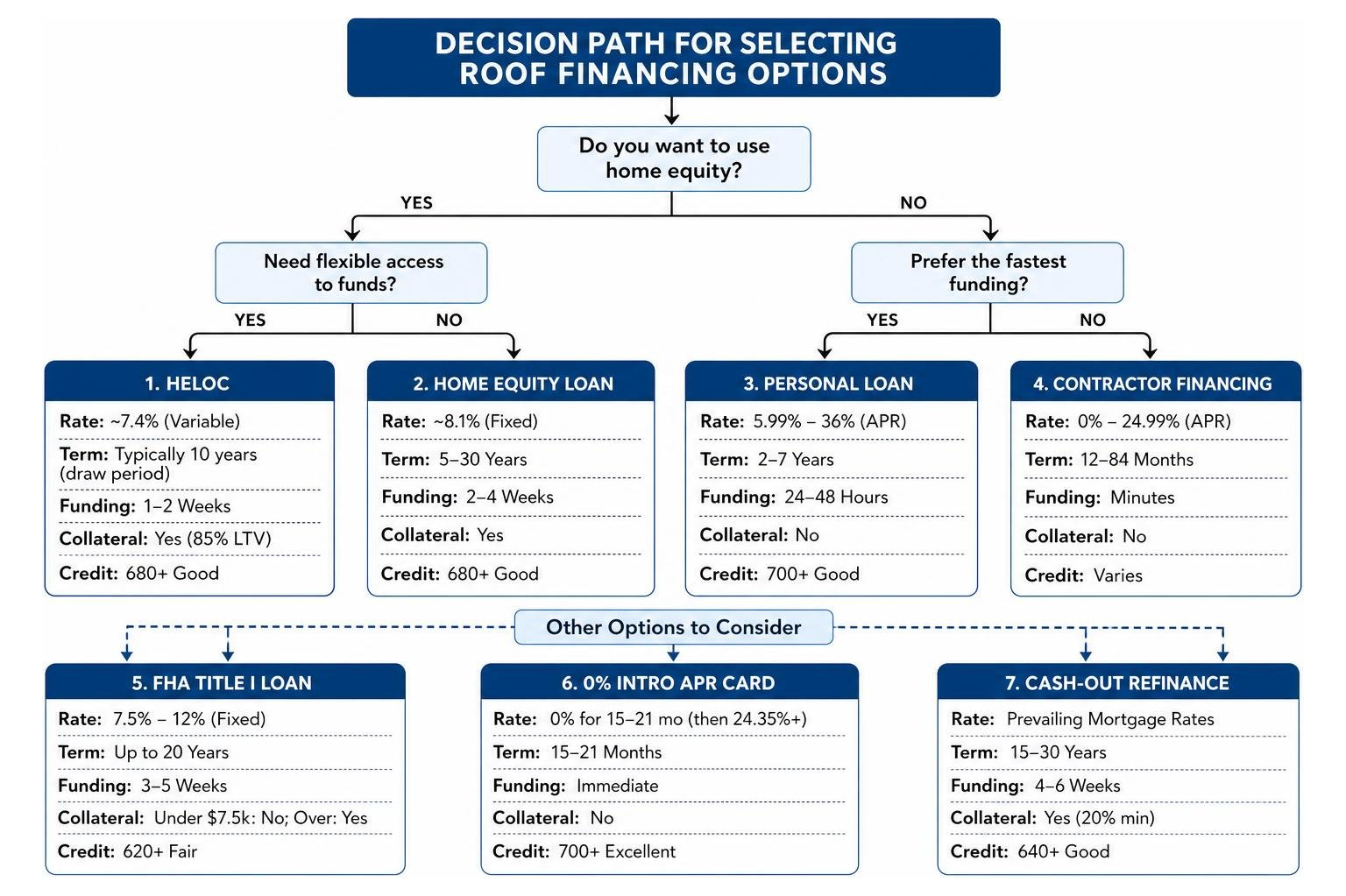
When facing an unexpected roof installation, choosing the wrong lending vehicle can cost you thousands in unnecessary interest or put your property at risk. To help you evaluate your paths, the table below breaks down the primary lending methods available today:
| Financing Option | Average APR (2026) | Typical Loan Terms | Speed to Funding | Equity Required? | Credit Score Tier |
|---|---|---|---|---|---|
| HELOC | ~7.4% (Variable) | 10-year draw / 10–20 yr repay | 2–6 Weeks | Yes (15–20% min) | 680+ Good/Excellent |
| Home Equity Loan | ~8.1% (Fixed) | 5–30 Years | 2–4 Weeks | Yes (15–20% min) | 660+ Good |
| Personal Loan | 5.99% – 36% (Avg ~12%) | 1–7 Years | 24–48 Hours | No (Unsecured) | 600–700+ Fair to Prime |
| Contractor Financing | 0% Promo to 28% APR | 12–120 Months | Minutes to 24 Hours | No | 580–720+ Flexible |
| FHA Title I Loan | 7.5% – 12% (Fixed) | Up to 20 Years | 3–5 Weeks | Under $7.5k: No; Over: Yes | 620+ Fair |
| 0% Intro APR Card | 0% for 15–21 mo (then 24.35%+) | 15–21 Months | Immediate | No | 700+ Excellent |
| Cash-Out Refinance | Prevailing Mortgage Rates | 15–30 Years | 4–6 Weeks | Yes (20% min) | 640+ Good |
Navigating these choices requires understanding how to finance a new roof safely without putting undue pressure on your family’s budget. Let’s look closely at how each of these seven options works.
1. Home Equity Lines of Credit (HELOC)
A Home Equity Line of Credit (HELOC) functions much like a credit card secured by your home. In mid-2026, the national average variable HELOC rate sits around 7.4%, making it one of the most affordable ways to borrow.
With a HELOC, you receive a revolving line of credit during a “draw period” (typically 10 years), during which you only pay interest on the money you actually spend. This setup is ideal if you are managing a phased home renovation alongside your roof upgrade. Most lenders cap borrowing at an 85% loan-to-value (LTV) limit, meaning your combined mortgage and HELOC balance cannot exceed 85% of your home’s appraised value. Furthermore, interest paid on a HELOC may be tax-deductible under IRS guidelines when used for substantial home improvements.
2. Fixed-Rate Home Equity Loans
If variable interest rates make you uneasy, a traditional home equity loan offers peace of mind. Currently averaging around 8.1% APR, this product provides a single, lump-sum disbursement with fixed monthly installment payments across a 5- to 30-year term.
Because a home equity loan acts as a second mortgage, your property serves as collateral. The application process requires an appraisal and full financial underwriting, which means funding takes two to four weeks. However, the reward is total payment predictability: your interest rate and monthly payment will never change over the life of the loan.
3. Unsecured Personal Loans
If you do not have sufficient equity in your house or prefer not to pledge your home as collateral, unsecured personal loans offer a swift, practical alternative. Rates generally range from 5.99% to 36% APR, with prime borrowers (credit scores of 700+) securing average rates around 12%.
The biggest advantage of a personal loan is speed: applications rely purely on your credit score and debt-to-income ratio, with approved funds often landing directly in your checking account within 24 to 48 hours. Because you receive the cash directly, you maintain complete control over project scheduling and payments. For a deeper breakdown of unsecured borrowing strategies, consult our ultimate roof financing guide.
4. Contractor Point-of-Sale Financing
Many reputable roofing contractors offer point-of-sale financing programs directly through digital lending platforms. You can often apply on a tablet right at your kitchen table and receive an approval decision within minutes.
These programs range from short-term “same-as-cash” zero-percent promotional periods (typically 12 to 18 months) to extended installment plans lasting up to 120 months. A $16,000 roof installation spread across a 10-year term can result in a predictable payment of roughly $200 per month. The primary benefit is speed and convenience, though you must examine the agreement carefully for deferred-interest terms.
5. Government-Backed Improvement Loans (FHA & HUD)
Homeowners who might not qualify for conventional bank loans due to limited equity or lower credit scores can explore federal lending programs:
- HUD / FHA Title I Loans: These loans allow primary homeowners to borrow up to $25,000 for home improvements. Loans under $7,500 are completely unsecured, while larger amounts require a lien on the property.
- USDA Section 504 Home Repair Program: Designed for very-low-income homeowners in designated rural areas, this program provides loans up to $40,000 with a fixed 1% interest rate and repayment terms up to 20 years.
These options make vital structural replacements accessible when commercial bank terms are out of reach.
6. 0% Introductory APR Credit Cards
Using a credit card with a 0% introductory APR window (often 15 to 21 months) can be a smart way to finance smaller roof repairs or bridge the out-of-pocket gap on an insurance deductible.
However, this method carries significant risk. If you carry a balance past the introductory window, standard credit card APRs currently average 24.35%—the highest levels seen since late 2024. Additionally, some contractors charge a 1.5% to 3.5% processing fee on card transactions, which can quickly erase any short-term financing savings.
7. Cash-Out Mortgage Refinance
A cash-out refinance replaces your existing primary mortgage with a brand-new, larger home loan, allowing you to withdraw the difference in cash to pay for your roof.
This vehicle works best during favorable mortgage rate environments or when you are planning an extensive property overhaul. However, closing takes four to six weeks and incurs $3,000 to $6,000 or more in lender closing costs. If an active leak is causing structural damage, a cash-out refinance is rarely fast enough on its own.
How to Navigate Insurance and Public Assistance
Before committing to private loans, always verify whether your roof replacement qualifies for an insurance claim or local grant funding.
Is Financing a Roof Replacement Covered by Homeowners Insurance?
Homeowners insurance policies cover sudden and accidental damage caused by windstorms, heavy hail, falling branches, or fire. They do not cover gradual deterioration, wear and tear, or lack of routine maintenance.
Understanding how your policy pays out is critical:
- Replacement Cost Value (RCV): Covers the full cost of replacing the roof with similar materials, minus your deductible, once repairs are completed.
- Actual Cash Value (ACV): Pays only the depreciated value of the roof based on its age. You must fund the depreciation gap out of pocket.
Important Compliance Reminder: Reputable contractors will never offer to “waive” or absorb your insurance deductible. Doing so constitutes insurance fraud. You can, however, use an unsecured personal loan or 0% credit card to finance your deductible legally.
Government Grants and Regional Energy Assistance
True government grants are income-restricted and reserved for specific safety needs:
- USDA Section 504 Grants: Low-income seniors aged 62 and older in rural communities may qualify for grants up to $10,000 to eliminate health and safety hazards.
- Weatherization Assistance Program (WAP): Assists low-income households with energy-efficiency upgrades that occasionally cover roof repairs tied to heat loss.
- Regional Assistance: Local homeowners in our service territory can look into county-backed support such as the Oakland County Home Improvement Program, which offers zero-interest deferred loans to eligible residents.
Hidden Traps, Red Flags, and Cost Drivers to Watch

Understanding fine-print clauses protects you from deceptive lending practices and inflated estimates.
The Danger of Deferred Interest and Hidden Dealer Fees
The single most common pitfall in home improvement financing is confusing a “0% promotional period” with a “true zero-percent loan.”
Most 0% contractor promotions utilize deferred interest. If you finance a $12,000 roof on an 18-month plan and leave even $50 unpaid at month 19, the lender retroactively charges full interest (typically 26% to 28% APR) back to day one on the original $12,000 balance.
To protect yourself, divide your total project cost across your promotional months minus two buffer months. If your term is 12 months, set up automatic payments to pay off the entire balance in 10 months.
Additionally, always ask your roofer for both the cash price and the financed price. Some contractor lenders charge dealer fees between 8% and 15% that disreputable companies quietly roll into your project quote. A transparent roofer provides flat-rate, consistent pricing across all payment methods.
2026 Tariff Impacts on Material Costs
Material inflation has reshaped project estimates across the country. In 2026, Section 232 tariffs on foreign steel and aluminum caused metal roofing installation costs to jump by approximately 60%. Domestic asphalt shingles have also seen price increases of 10% to 18% due to higher input costs.
Because labor represents 40% to 60% of total replacement expenses, securing an experienced crew that installs materials right the first time is critical to avoiding costly rework.
Step-by-Step Strategy to Fund Your Roof Replacement
To avoid project delays, take a methodical approach to calculating your costs and securing financing.
Key Factors to Calculate Before Financing a Roof Replacement
Before applying for a loan, establish your target borrowing budget by assessing:
- Square Footage: Roofing is priced by the “square” (100 square feet).
- Pitch and Architectural Complexity: Steep roof pitches add labor and safety setup charges.
- Tear-Off and Disposal: Removing multiple layers of old shingles requires disposal dumpster fees.
- Municipal Permits: Local building department fees.
- Decking Contingency: Always build a 10% to 15% contingency buffer into your financing application. If old decking is rotted beneath the underlayment, this buffer prevents mid-project financing stress.
Review our in-depth guide on calculating what a new roof costs to determine your exact numbers.
How to Compare Loan Offers and Secure Fast Approval
- Pre-Qualify Online: Use lenders that utilize soft credit inquiries, which let you compare loan offers without hurting your credit score.
- Gather Financial Records: Assemble your last two W-2s, recent pay stubs, and two months of bank statements to speed up underwriting.
- Check Prepayment Penalties: Verify that your loan contract has zero fees for early loan payoff.
- Demand a Mechanic’s Lien Release: Once the final payment is disbursed to your roofer, obtain a signed lien release to ensure clear title to your home.
- Vet Your Contractor: Partner only with licensed, insured professionals by following our guide to hiring a reliable roofing contractor.
Frequently Asked Questions About Roof Loans
What credit score is needed to qualify for the best roof replacement financing?
To secure prime interest rates (5.99% to 10% APR), aim for a credit score of 700 or higher. Borrowers with scores between 650 and 699 can readily secure financing, though rates typically land between 12% and 18%. For scores below 620, government-insured loans (like FHA Title I) or applying with a creditworthy co-signer offer the best paths to approval.
How fast can I get funding for an emergency roof leak?
Unsecured personal loans and digital contractor financing provide the quickest turnaround, often approving applications within minutes and releasing funds within 24 to 48 hours. If severe weather causes active water leaks inside your home, we recommend scheduling an immediate emergency tarping service to stop interior damage while your financing finalizes.
Is the interest paid on a roof replacement loan tax-deductible?
Interest paid on HELOCs and home equity loans is often tax-deductible under IRS Publication 936 guidelines, provided the borrowed funds are used to substantially improve your primary residence. Interest paid on unsecured personal loans, contractor installment plans, and credit cards is not tax-deductible. Always consult a qualified tax professional regarding your situation.
Conclusion
Replacing your roof is an essential investment that safeguards your home, your possessions, and your family’s safety. You do not need to empty your hard-earned emergency fund to keep your living space warm and dry. By matching the right financing vehicle—whether that is a low-rate HELOC, an instant unsecured personal loan, or structured contractor payment plans—you can keep your monthly budget predictable and stress-free.
At The Roof Company, we provide homeowners across Southeast Michigan—including Novi, South Lyon, and throughout Oakland, Livingston, Washtenaw, Macomb, and Wayne counties—with honest pricing, lifetime workmanship guarantees, and complete peace of mind.
Explore our flexible roof replacement financing options today to schedule your comprehensive roof evaluation and secure an affordable payment plan tailored to your budget.


