


Average Cost to Fix Roof Flashing in 2026
When budgeting for flashing repairs, national benchmarks show an average spend of roughly $350 to $450 for standard residential projects. However, actual pricing spans anywhere from $150 for minor sealant touch-ups to over $2,500 for complex architectural fixtures.
Flashing serves as the unsung defense system of your roof, directing water away from vulnerable intersections, joints, and penetrations. According to the National Roofing Contractors Association (NRCA), flashing failures account for 40% to 50% of all residential roof leaks. Because metal flashing is installed beneath or interwoven with surrounding shingles, labor typically represents 40% to 60% of the total bill.
Understanding small roof leak repair costs helps illustrate how quickly expenses can shift depending on the specific fixture, material, and repair scope. For broader context on how flashing fits into the overall roofing system, the Roof entry on Wikipedia explains the structural role of roof coverings and drainage components.
| Flashing Type / Fixture | Common Material | Average Repair Range | Full Replacement Range |
|---|---|---|---|
| Vent Pipe Boot | Neoprene / Rubber Collar & Aluminum | $150 – $300 | $200 – $450 |
| Drip Edge | Aluminum / Galvanized Steel | $200 – $500 | $300 – $800 |
| Step Flashing (Wall Seam) | Aluminum / Galvalume | $300 – $750 | $600 – $1,400 |
| Valley Flashing (Open/Closed) | Heavy-Gauge Aluminum / Steel | $400 – $900 | $800 – $1,800 |
| Skylight Flashing Kit | Aluminum / Factory Metal Kit | $350 – $800 | $750 – $1,600 |
| Chimney Flashing System | Copper / Lead / Galvanized Step & Counter | $500 – $1,200 | $1,200 – $2,500+ |
Standard hourly labor rates for roofing repairs across Oakland County, Livingston County, and surrounding communities generally range from $75 to $150 per hour for standard roof slopes, increasing to $100 to $200 per hour for steep, complex structural layouts.
The 5 Key Factors That Determine Your Flashing Repair Bill
Contractor estimates for flashing repairs are rarely one-size-fits-all. When our team inspects a failing flashing line, we evaluate five critical variables that dictate project scope, safety requirements, and total investment.
1. Material Selection and the Cost to Fix Roof Flashing
The type of metal or barrier used on your roof heavily influences both the upfront price and the lifespan of the repair. On longer flashing runs—such as valleys or perimeter eaves—contractors often quote work on a linear-foot basis, ranging from $3.00 to $14.50 per linear foot for combined material and labor.
- Aluminum ($2.00 – $6.00 per linear foot): The industry standard for modern residential roofs. Aluminum is rust-resistant, easy to bend on-site, and pairs cleanly with asphalt shingles. It boasts an expected service life of 40 to 60 years when properly installed.
- Galvanized Steel ($3.00 – $8.00 per linear foot): Durable and rigid, though vulnerable to rust over time if the protective zinc coating is scratched or exposed to prolonged standing water.
- Galvalume / Stainless Steel ($4.50 – $9.50 per linear foot): Offers heightened corrosion resistance, making it an excellent upgrade for high-moisture roof valleys and wall joints.
- Copper ($5.00 – $20.00+ per linear foot): The gold standard of roofing metals. While copper materials cost significantly more than aluminum, copper develops a protective patina, requires no artificial sealants, and lasts 75 to 100+ years. It is frequently requested on historic properties, masonry chimneys, and slate or cedar installations.
Choosing the right metal means balancing budget with longevity. Matching repair materials to your existing roofing system prevents galvanic corrosion, which occurs when dissimilar metals touch and rapidly degrade.
2. Location and Type of Flashing Fixture
Flashing is engineered specifically for the part of the home it protects. Complex junctions with multiple intersecting planes require substantially more time, materials, and precision than straight runs.
- Vent Pipe Boots: Plumbing stacks penetrate the roof decking to vent sewer gases. Rubber or neoprene boots slip over the pipe to seal the opening. Over time, UV rays dry out the rubber, causing it to split. Replacing a pipe collar or installing a fresh boot is one of the quickest, most affordable flashing repairs ($150 to $300).
- Step and Counter Flashing: Step flashing protects the joint where a sloped roof meets a vertical wall or dormer. Individual L-shaped metal pieces are woven into each shingle course with at least a 2-inch overlap. When meeting masonry, a second layer—called counter flashing—is embedded into the mortar joints (reglets). Rebuilding a failed step and counter flashing system requires careful masonry grinding and shingle lifting, driving repairs to $600 to $1,400.
- Chimney Flashing Systems: A complete chimney system utilizes four distinct flashing components: base flashing, step flashing along the sides, counter flashing cut into the brickwork, and a backer or cricket flashing. Under International Residential Code (IRC R903.2.1), any chimney wider than 30 inches requires a cricket (a small peak behind the chimney) to divert water around the masonry. Rebuilding a chimney flashing system is meticulous work, often costing $1,200 to $2,500.
- Valley Flashing: Roof valleys channel massive volumes of rushing rainwater during storms. Repairing open or closed valleys requires pulling up adjoining shingles across two distinct roof planes, placing costs between $400 and $1,800 depending on total run length.
- Drip Edge: Installed along eaves and rakes to guide water directly into the gutters rather than soaking the fascia board. Drip edge is legally required by modern building codes (IRC R905.2.8.5) on asphalt roofs.
- Skylights: Skylight curbs require specialized corner and step kits. If the factory seal fails, replacing the surround kit without damaging the glass curb averages $350 to $800.
3. How Damage Severity Impacts the Cost to Fix Roof Flashing
A leaking flashing piece is rarely an isolated problem if it has gone unnoticed through multiple seasons of rain and freeze-thaw cycles. When water breaches the metal barrier, the damage quietly travels downward.
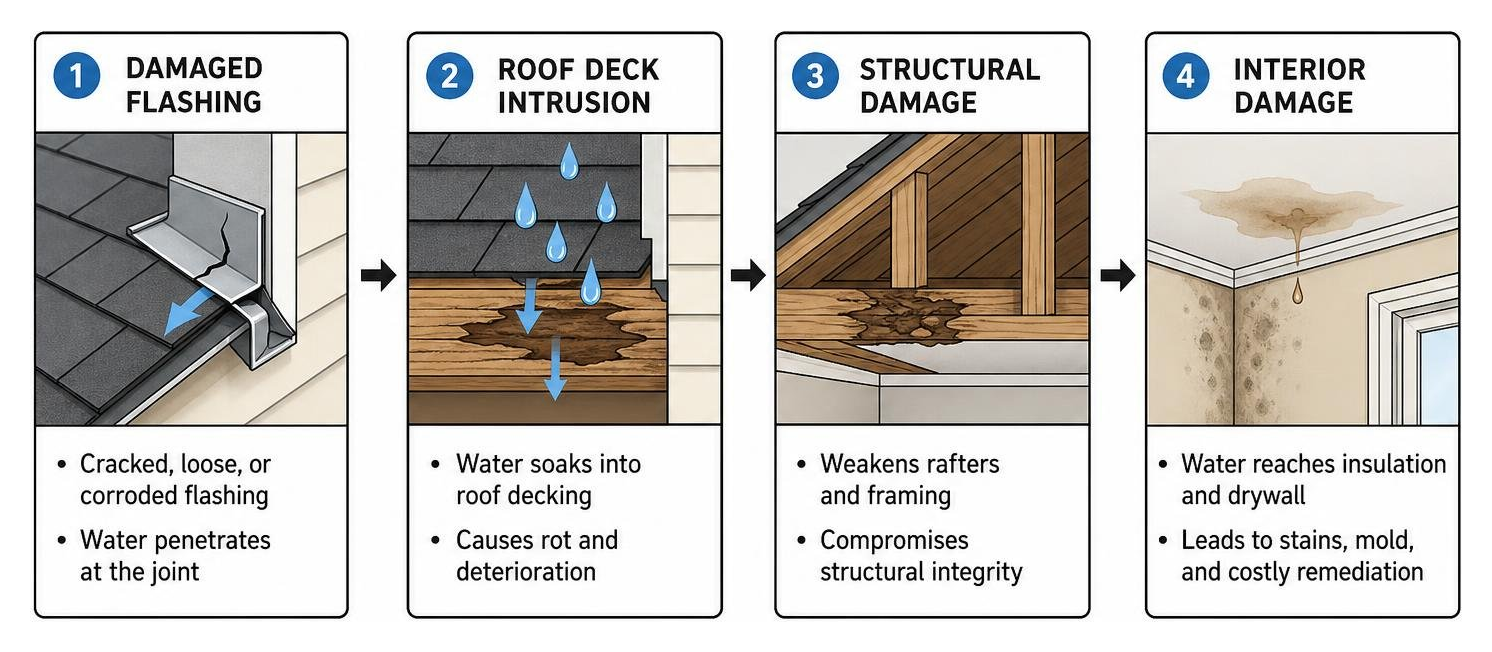
When caught early, a flashing issue may only require replacing dried-out polyurethane sealant or re-fastening a loose metal flange. However, deferred maintenance leads to secondary structural issues:
- Rotted Roof Decking: Water trapped beneath shingles rots the plywood or OSB sheathing. Replacing damaged deck boards typically adds $150 to $800 to your roofing invoice.
- Damaged Rafters and Trusses: Long-term moisture infiltration weakens structural framing members. Splicing or replacing deteriorated rafters can cost $400 to $800 per affected rafter.
- Interior Remediation and Mold: Water migrating through attic insulation and drywall triggers dangerous mold growth and ceiling stains. Remediating interior leak damage can easily run from $500 to over $3,000.
Scheduling professional roof inspection services at the first sign of moisture ensures small gaps are caught before structural decay develops underneath.
4. Roof Pitch, Height, and Accessibility
Roof architecture directly dictates the safety precautions, equipment, and crew size needed to complete the repair.
- Roof Pitch: Pitch measures vertical rise over horizontal run (e.g., a 4/12 pitch rises 4 inches for every 12 inches of run). Low-to-moderate pitches (4/12 to 6/12) are easy to walk on and require minimal staging. Steep slopes (8/12 to 12/12+) require specialized roof brackets, staging planks, and full fall-arrest harness systems. Steep-pitch labor rates run 20% to 40% higher due to the extra setup time and restricted movement.
- Building Height: Working on a single-story ranch involves simple ladder setups. Accessing a two-story or three-story home requires extended ladders, safety rigging, and extra hands on the ground to manage equipment, adding $100 to $300 to mobilization costs.
- Site Obstacles: Inaccessible yards, extensive landscaping, pool enclosures, or tight lot lines prevent contractors from placing ladders directly beneath the work zone, requiring specialized scaffolding.
5. Labor Rates and Regional Building Codes
Labor costs vary based on regional economics, contractor qualifications, and strict adherence to municipal building regulations. In Southeastern Michigan communities across Wayne, Macomb, Livingston, and Washtenaw counties, licensed roofing labor rates reflect the technical expertise required to manage harsh winters, heavy snow loads, and ice damming.
Local building authorities enforce model codes such as the International Residential Code (IRC):
- IRC R905.2.8.3: Mandates that step flashing at side wall transitions must be corrosion-resistant metal measuring at least 4 inches high and 4 inches wide, properly lapped to shed water.
- IRC R905.2.8.5: Requires drip edge along all eaves and gable rake edges, lapped beneath the underlayment along eaves and over the underlayment along rakes.
Hiring reputable local roofing contractors protects you from shortcut installations that fail city code inspections. Unlicensed handymen quoting prices 30% below market average frequently skip mechanical fastening, rely exclusively on temporary caulking, or lack mandatory public liability and worker’s compensation insurance.
Flashing Repair vs. Full Roof Replacement
When faced with a flashing estimate that climbs over $1,500 due to extensive multi-wall leaks, homeowners often ask: Should I repair the flashing or replace the entire roof?
A practical rule of thumb used by roofing professionals is the 25 Percent Rule: If the cost of repairing the flashing and surrounding shingles exceeds 25% of the cost of a complete roof replacement, and your existing roof is already over 15 to 20 years old, a full replacement is generally the more sound financial investment.
When calculating expected roof replacement costs, consider the condition of the surrounding materials:
- Shingle Brittleness: As asphalt shingles age, they lose their essential oils and flexibility. Lifting 20-year-old shingles to slide new step flashing underneath often causes the surrounding tabs to snap, leading to cascading patchwork that looks unsightly and leaks elsewhere.
- Comprehensive Warranty: Installing new flashing during a complete reroofing project is faster and far more affordable per linear foot, because the deck is completely clear and the flashing integrates cleanly with modern ice and water shields.
Professional Repair vs. DIY: Financial Risks and Safety
With hardware stores selling $20 cans of roofing sealant and $30 pipe collars, taking a DIY approach to flashing repair can seem tempting. However, flashing is the most technically demanding element of any roofing system.
DIY Limitations and Risks
- The Caulk Trap: Homeowners frequently apply silicone or standard acrylic caulk to an active flashing seam. Silicone degrades rapidly under intense solar UV radiation, peeling away within 6 to 12 months. Professional roofers rely on high-grade elastomeric polyurethane sealants (such as Geocel or Solar Seal) that expand and contract with temperature shifts.
- Improper Fastener Placement: Nailing through the face of step flashing or face-nailing valley metal creates direct entry points for water. Flashing must be secured at the top flange and integrated under the shingle layer.
- Fall Hazards: Working on steep, elevated surfaces without professional fall-protection gear accounts for thousands of severe residential accidents every year.
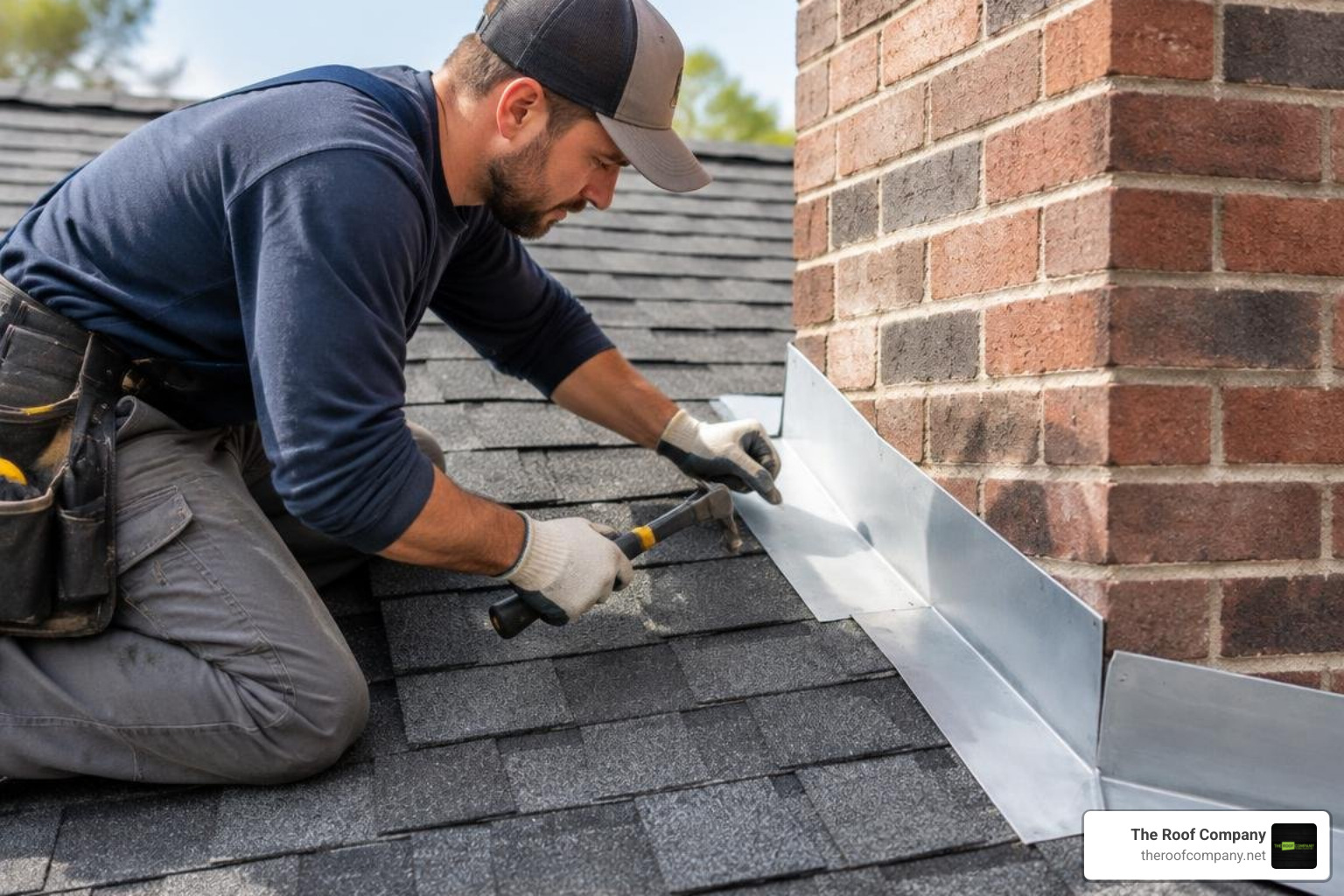
While handy homeowners can safely replace a rubber vent boot collar on an accessible single-story porch roof, complex chimney, wall, or valley flashing should always be handled by trained, insured professionals who guarantee their work.
Frequently Asked Questions About Roof Flashing Costs
Does homeowners insurance cover flashing repair?
Homeowners insurance typically covers roof flashing repairs if the damage is caused by a sudden, covered peril—such as a fallen tree limb, heavy hail, or severe wind tearing metal panels loose. However, insurance policies generally exclude damage resulting from standard wear and tear, rust, aged sealants, or poor original installation. If a covered storm damages your flashing and causes interior ceiling leaks, your policy may cover the structural and drywall remediation minus your deductible.
How long does a roof flashing repair take?
Most residential flashing repairs take between 2 to 6 hours to complete. A simple vent pipe boot replacement can be wrapped up in under an hour, whereas rebuilding a multi-tier chimney flashing system or replacing a 20-foot valley run may take a full working day. Timelines can extend if the roofer discovers rotted decking or if inclement weather interrupts work.
Can roof flashing be repaired without replacing shingles?
Minor repairs—such as resealing sound counter flashing joints or sliding a retrofit collar over an existing plumbing vent—do not require disturbing the surrounding shingles. However, replacing corroded step flashing, chimney base metal, or valley pans requires carefully breaking the adhesive seal on adjoining shingles, pulling nails, and sliding new metal into place. If the shingles are old and brittle, your contractor will need to install replacement shingles over the repaired flashing section.
Conclusion
Roof flashing may only make up a tiny fraction of your home’s exterior surface area, but it performs the heaviest lifting when it comes to keeping water out of your living space. Addressing lifted seams, cracked pipe boots, and deteriorated chimney flashing the moment you spot them is the most reliable way to avoid thousands of dollars in water damage, rotted framing, and mold remediation.
At The Roof Company, we believe in straightforward communication, transparent pricing, and permanent solutions backed by lifetime craftsmanship guarantees. If you suspect a flashing leak or want an honest evaluation of your roofline across Novi, South Lyon, or Southeastern Michigan, schedule an inspection with our team for expert roof repair services and protect your home with confidence.


