


A Commercial Metal Roof Can Deliver Decades of Reliable Protection
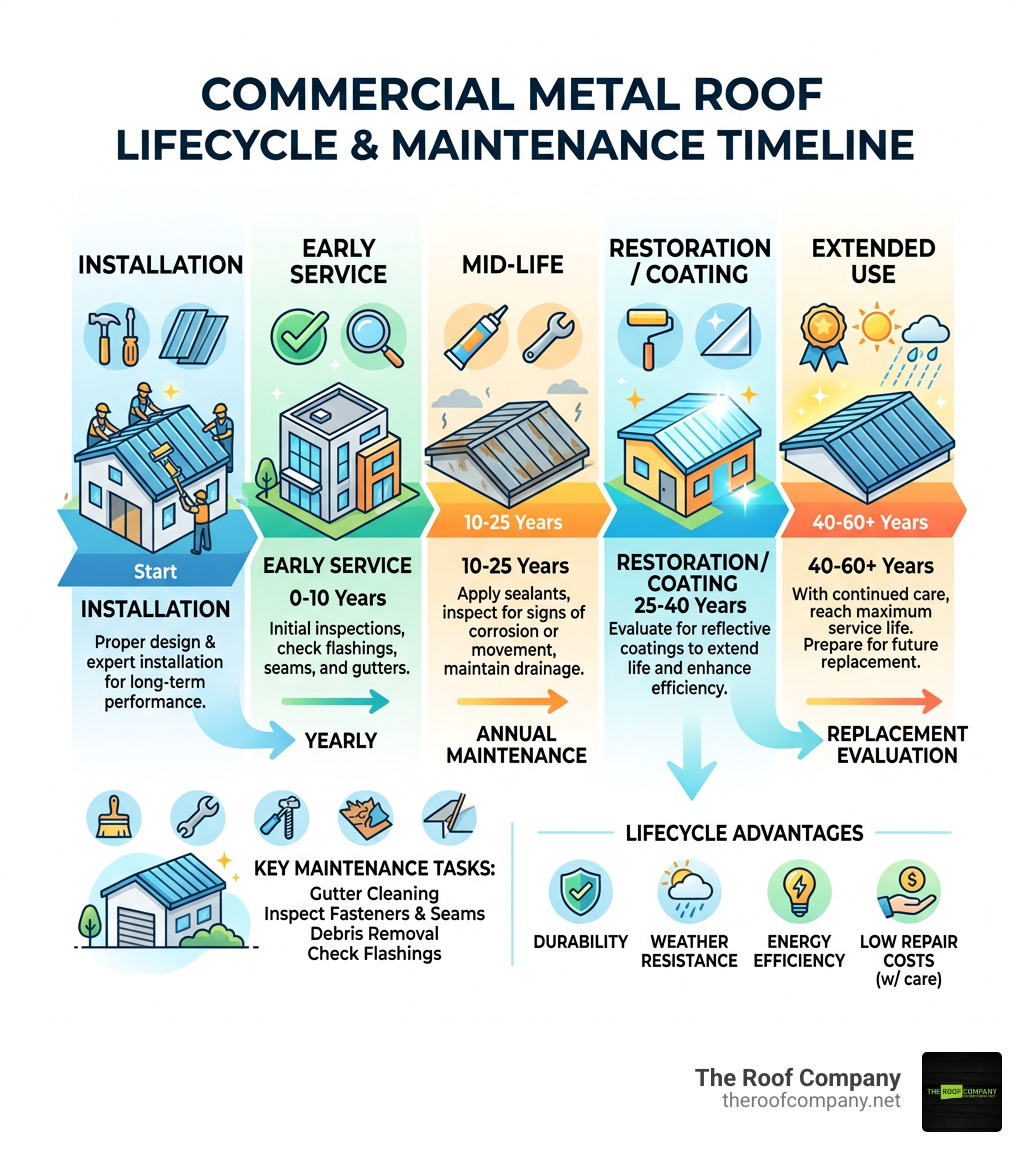
A commercial metal roof is a strong long-term option for property owners who want fewer leak-related repairs, better weather resistance, and a service life that can reach 40 to 60 years or more with proper care. The best choice depends on your roof slope, local weather, budget, and maintenance plan, but standing seam systems are often preferred for low-slope commercial buildings because their fasteners are concealed and better protected from water.
Metal roofing can also lower cooling demand through reflective coatings and ventilation strategies. But it is not maintenance-free. Regular inspections of seams, flashings, fasteners, sealant, drainage paths, and surface coatings help catch small issues before they become disruptive leaks.
For a building owner tired of surprise repairs, the key is simple: choose a properly designed system, confirm it meets wind and weather requirements, and maintain it on a clear schedule.
I’m Darren, Co-Owner of The Roof Company, with more than 30 years in roofing and exterior projects across Southeast Michigan. I’ve seen how a well-installed, routinely maintained commercial metal roof can replace uncertainty with a more predictable plan for protecting a property.
Core Types and Profiles for Commercial Metal Systems
When selecting a commercial metal system, the profile you choose dictates installation speed, lifecycle cost, maintenance frequency, and weather resistance. While metal panels share foundational strengths like durability and non-combustibility, their assembly methods set them apart.
Standing seam systems represent the gold standard for commercial and industrial facilities. These profiles feature vertical legs that interlock above the water level of the panel flat. Using concealed clips anchored to the roof deck, standing seam allows thermal expansion and contraction without stressing the fasteners. Advanced profiles such as symmetrical mechanically seamed standing seam roof systems provide the added advantage of field-removable individual panels, meaning facility modifications or skylight retrofits do not require tearing apart entire runs of roof.
Exposed fastener systems (often called R-panel, Mega-Rib, or corrugated metal) are mechanically fastened through the face of the metal panel directly into the underlying purlins or decking. These systems are significantly more economical up front—often costing nearly half as much for materials and labor compared to standing seam. However, because thousands of fastener screws with neoprene or EPDM washers penetrate the weather-facing surface, they require a stricter maintenance schedule to monitor washer degradation and thermal screw backing.
Metal shingles and simulated tile panels provide the look of traditional slate, cedar, or barrel tiles while maintaining the lightweight, impact-resistant properties of steel. These are ideal for steep-slope commercial properties, such as medical plazas, retail storefronts, and multi-family residential communities where curb appeal is a driving design factor.
| Feature / Metric | Standing Seam (Concealed Fastener) | Exposed Fastener (Corrugated / Ribbed) |
|---|---|---|
| Fastener Exposure | Hidden underneath interlocking seams | Screwed through panel face into structure |
| Minimum Pitch/Slope | Down to 1/2:12 (or 1/4:12 with mechanical seams) | Typically 3:12 to 5:12 minimum |
| Initial Installation Cost | Higher initial investment | Lower initial investment (near half) |
| Thermal Movement Handling | Floating clips absorb expansion freely | Expansion stresses fastener penetrations |
| Maintenance Demands | Very low (inspections & flashings) | Moderate (gasket replacements & screw checks) |
| Typical Life Expectancy | 50 to 70+ years | 30 to 45 years |
Material Profiles for Your Commercial Metal Roof
The metal alloy selected for your building envelope determines how your roof reacts to environmental stressors, chemical exposure, and atmospheric moisture.
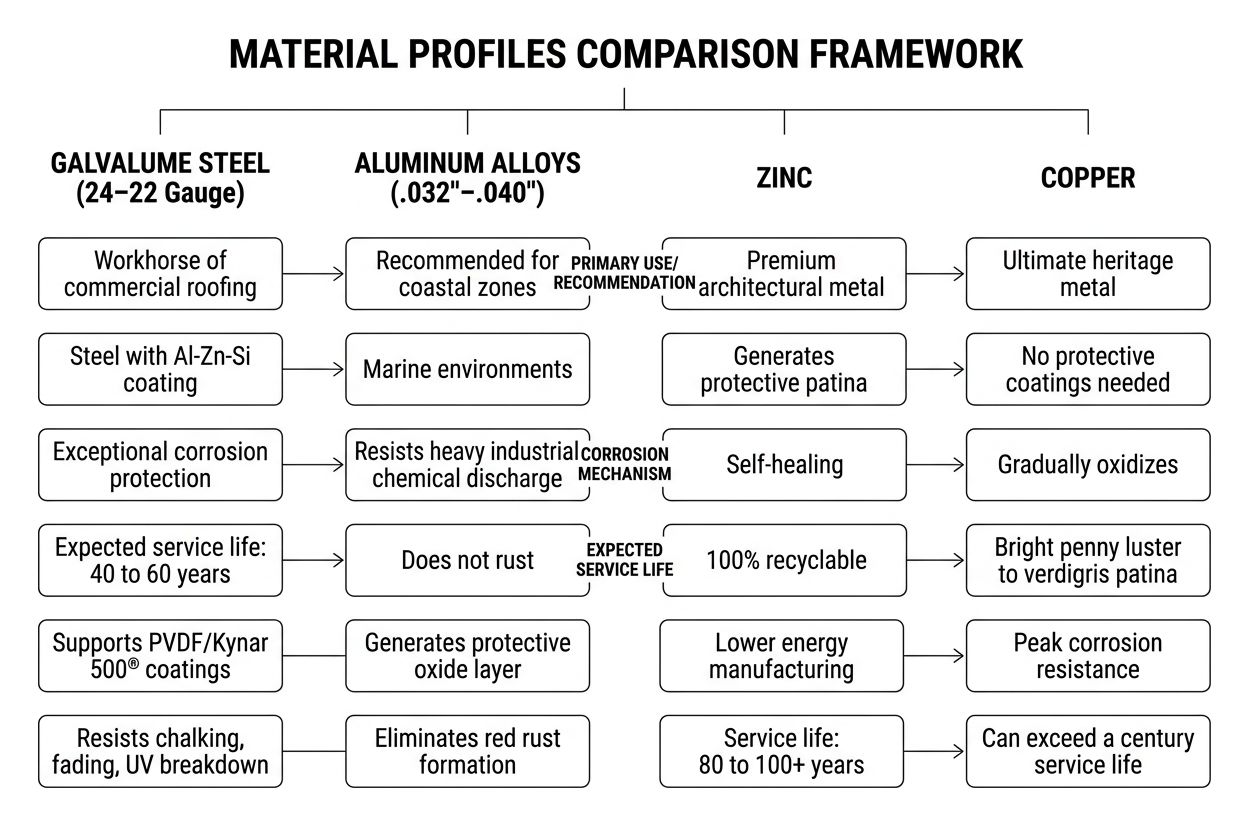
- Galvalume Steel (24–22 Gauge): The undisputed workhorse of modern commercial roofing. Galvalume combines steel sheet with an alloy coating of aluminum, zinc, and silicon. It provides exceptional corrosion protection and mechanical rigidity, offering an expected service life of 40 to 60 years. When topped with high-performance polyvinylidene fluoride (PVDF / Kynar 500®) coatings, it resists chalking, fading, and UV breakdown.
- Aluminum Alloys (.032″–.040″): Highly recommended for coastal zones, marine environments, or facilities near heavy industrial chemical discharge. Aluminum does not rust; it naturally generates a protective oxide layer if scratched, eliminating the possibility of red rust formation.
- Zinc: A premium architectural metal that generates its own protective zinc carbonate patina over time. Zinc is self-healing, 100% recyclable, uses less energy during manufacturing than most architectural metals, and routinely lasts 80 to 100+ years.
- Copper: The ultimate heritage metal. Copper does not require protective coatings and gradually oxidizes from a bright penny luster to a verdigris patina. It delivers peak corrosion resistance and can easily exceed a century of service life.
To combine weatherproofing with interior temperature control, many property owners specify factory-engineered insulated composite standing seam panels that unite structural steel facing, continuous core insulation, and an interior vapor barrier in a single modular component.
Insulated Metal Panels vs. Traditional Single-Skin Metal
Traditional single-skin metal installations utilize uninsulated metal panels fastened over a layer of roof underlayment, requiring separate batt or rigid board insulation layers built on top of or below the decking.
Insulated Metal Panels (IMPs) modernize this workflow by bonding high-efficiency polyisocyanurate (PIR) or polyurethane (PUR) rigid foam cores between two structural metal skins.
The benefits of choosing an IMP system include:
- Superior Thermal Envelopes: IMPs provide continuous R-values ranging from R-17.5 for 2-inch panels up to R-52.5+ for 6-inch panels, meeting stringent local building energy codes with zero thermal bridging.
- Condensation Elimination: Because the insulation core is factory-sealed to both metal facings, ambient interior moisture cannot reach cold exterior panel surfaces, preventing interstitial condensation and interior dripping.
- HVAC Load Reduction: Facilities utilizing insulated metal panels can see heating and cooling energy expenditures drop by up to 20% to 30%, rapidly offsetting initial capital outlay.
Key Factors When Evaluating a Commercial Metal Roof System
Selecting an appropriate metal roofing solution requires matching structural properties to the specific demands of your building.

- Roof Slope Requirements: Roof geometry sets the structural boundary. Mechanically seamed standing seam roofs with factory-applied hot-melt sealant can safely accommodate low slopes down to 1/2:12 or even 1/4:12 pitch. Conversely, exposed fastener and corrugated profiles require greater slope (typically 5:12 or steeper) to prevent water from backing up around the fastener penetrations.
- Wind Uplift Engineering: Commercial roofs must withstand severe upward wind force generated along building perimeters and corners. Specify systems certified under UL 580 Class 90 and tested to ASTM standards to ensure clips and panels stay bonded during high-wind events.
- Impact Resistance: Hail and flying debris can puncture inferior substrates. Choosing systems with a UL 2218 Class 4 impact rating guarantees your roof resists structural puncturing from large hail, preserving building envelope integrity and often lowering property insurance premiums.
- Thermal Expansion: Metal expands under direct sunlight and contracts during freezing nights. Floating clip assemblies allow the roof panels to glide smoothly without warping, oil canning, or shearing off fasteners.
When evaluating system requirements for an upcoming facility overhaul, getting a comprehensive commercial roofing project assessment helps identify whether structural deck reinforcement or insulation upgrades are needed before installation.
Weather Performance and Building Code Approvals
Commercial metal roofs are uniquely engineered to withstand regional climate extremes. With proper installation, they hold a Class A Fire Rating (UL 263)—the highest non-combustible classification available—preventing airborne embers from igniting the facility roof.
Underneath the metal panels, modern assemblies incorporate continuous, high-temperature self-adhering underlayment barriers (such as modified bitumen membranes) that seal around fasteners and maintain water tightness even if wind-driven rain penetrates an edge detail. Systems tested under ASTM E1646 for water penetration confirm absolute structural barrier performance during torrential storms.
Retrofit and Roof Recovery Options
One of the largest hidden advantages of metal systems is their ability to retrofit directly over failing commercial roofs without the disruption, landfill costs, and weather vulnerability of an immediate tear-off.
- Metal-Over-Metal Recovery: If your current pre-engineered metal building roof is aging or leaking at the fasteners, specialized symmetrical standing seam systems can be installed directly over the existing ribs using lightweight sub-framing. This can add up to 4 inches of continuous insulation between the old and new roofs, increasing the thermal envelope.
- Metal-Over-Shingle Retrofit: When re-roofing steep-slope multi-family or office roofs, standing seam systems designed with tall clips allow direct placement over existing asphalt shingles, saving substantial labor and disposal expenses.
Reviewing a detailed breakdown of commercial roof investment and budgeting helps clarify how eliminating full tear-off labor can drastically improve total return on investment.
Proactive Maintenance Tips to Maximize Service Life
While a high-performance commercial metal roof easily outperforms built-up and single-ply membranes in longevity, maximizing that 40-to-60-year horizon requires proactive, routine care.
1. Perform Scheduled Biannual Inspections
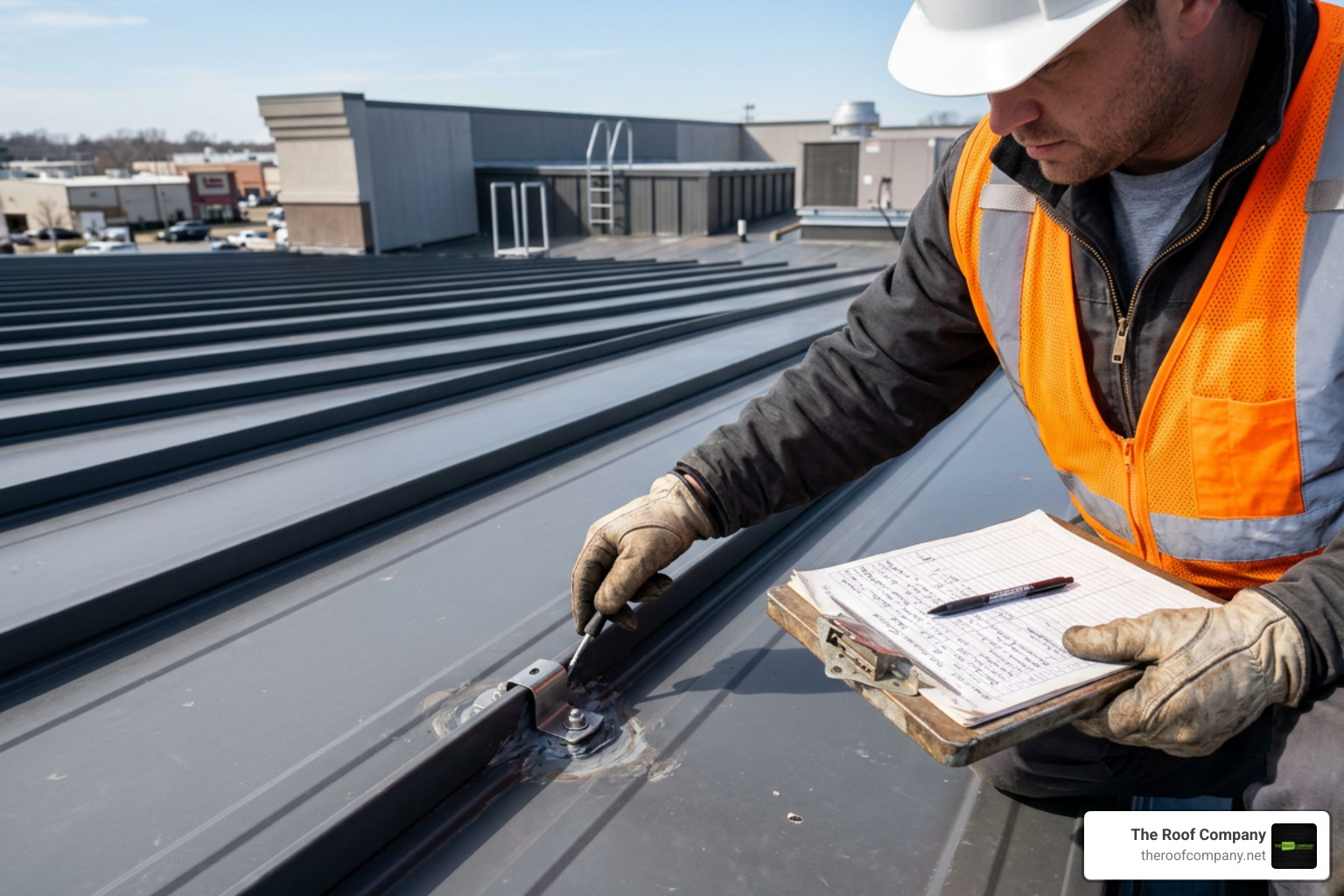
Inspect your roof surface twice annually—once in early spring and once in late fall—as well as immediately following severe wind or hailstorms. Check for debris accumulation, surface scuffs, displacement of trim flashings, or shifting sealant beads around skylights and HVAC curbs.
2. Inspect and Refresh Perimeter Sealants and Pipe Boots
The metal panel itself will not degrade, but secondary components have shorter lifespans. EPDM pipe boots, parapet joint caulk, and expansion joint sealants dry out under continuous UV exposure. Re-caulking penetrations with industrial-grade polyurethane or silicone sealants prevents water tracking behind panels.
3. Check Fasteners and Torque Tolerances (Exposed Systems)
On exposed-fastener roofs, annual inspections must include testing fastener tightness. Backed-out screws must be re-torqued, and cracked, weathered neoprene washers should be replaced with oversized gasketed fasteners to maintain compression seals.
4. Clear Gutters, Scuppers, and Drainage Paths
Standing water is the enemy of any roof edge. Ensure that internal box gutters, downspouts, and perimeter scuppers remain free of leaves, silt, and windblown trash. Standing water creates hydrostatic pressure that tests panel laps and accelerates corrosion on raw cut metal edges.
5. Prevent Galvanic Corrosion
Never allow dissimilar metals to come into direct contact. For example, placing copper condensate drains or lead flashings directly against a Galvalume or aluminum roof triggers rapid electrochemical corrosion. Always use non-conductive rubber isolation gaskets and stainless steel fasteners when adding rooftop accessories.
To streamline budgeting for ongoing facility updates, exploring financing options for commercial roof upgrades can keep critical structural repairs moving forward without straining daily operational cash flow.
Extending the Life of an Aging Commercial Metal Roof
When a commercial metal roof reaches 25 to 30 years of age, proactive restoration can add decades of service life before a full replacement is ever needed:
- Fluid-Applied Elastomeric Coatings: Applying high-solids silicone or acrylic coatings over aging Galvalume roofs seals pinholes, restores UV reflectivity, and encapsulates seams.
- Seam Re-Crimping & Clip Replacement: Mechanically re-rolling compromised standing seams reinforces wind uplift resistance along perimeter edges.
- Substructural Reinforcement: Installing supplemental bridge clips or sub-framing under stress points ensures old purlins maintain code-compliant deflection tolerances.
When planning structural preservation work, partnering with professional roofing specialists ensures all work complies with factory guidelines and regional building codes.
Frequently Asked Questions About Commercial Metal Systems
Are commercial metal roofs noisy during heavy rain or hail?
No. In commercial structures, metal roofing is rarely installed as a bare sheet directly over an open interior without acoustic dampening. Panels are installed over solid substrate decks, rigid continuous insulation (polyiso or PIR foam), and heavy-duty acoustic underlayment.
These layered assemblies absorb vibrational sound waves, keeping interior decibel levels during heavy downpours comparable to—and often quieter than—conventional asphalt shingle or single-ply membrane installations.
What is the expected lifespan and warranty for commercial metal roofs?
Depending on the alloy and system profile selected, a commercial metal roof provides an expected service life of 40 to 100+ years.
- Galvalume Steel: 40 to 60 years of structural performance.
- Aluminum: 50 to 70 years.
- Zinc and Copper: 80 to 100+ years.
Factory finish warranties on PVDF (Kynar 500®) coatings typically run for 30 to 35 years non-prorated, protecting against fading, chalking, and panel peeling. Substrate weathertightness warranties from leading manufacturers range between 20 and 30 years when installed by certified commercial contractors.
Do commercial metal roofs attract lightning strikes?
No. Metal roofing does not increase the likelihood of a building being struck by lightning. Lightning is attracted to the highest geographic point, not the material itself.
In the rare event of a strike, a commercial metal roof is actually safer than combustible roofing types: as a non-combustible (Class A fire rated), electrically conductive material, metal safely dissipates and spreads electrical energy across the building’s exterior structural frame toward ground pathways without catching fire.
Conclusion
A well-engineered commercial metal roof provides unbeatable long-term ROI, unmatched wind and fire resilience, and dependable energy savings. By selecting the right profile for your roof pitch and committing to regular preventive maintenance, your building envelope will remain secure and watertight for decades to come.
At The Roof Company, we prioritize clear communication, dependable craftsmanship, and lifetime protection for every commercial property we serve. Whether you need an honest inspection, emergency leak service, or a complete system retrofit, our certified team is ready to help. Schedule a commercial roof evaluation with The Roof Company today to protect your facility with confidence.


